Inspired By: Maayan Sophia Weisstub
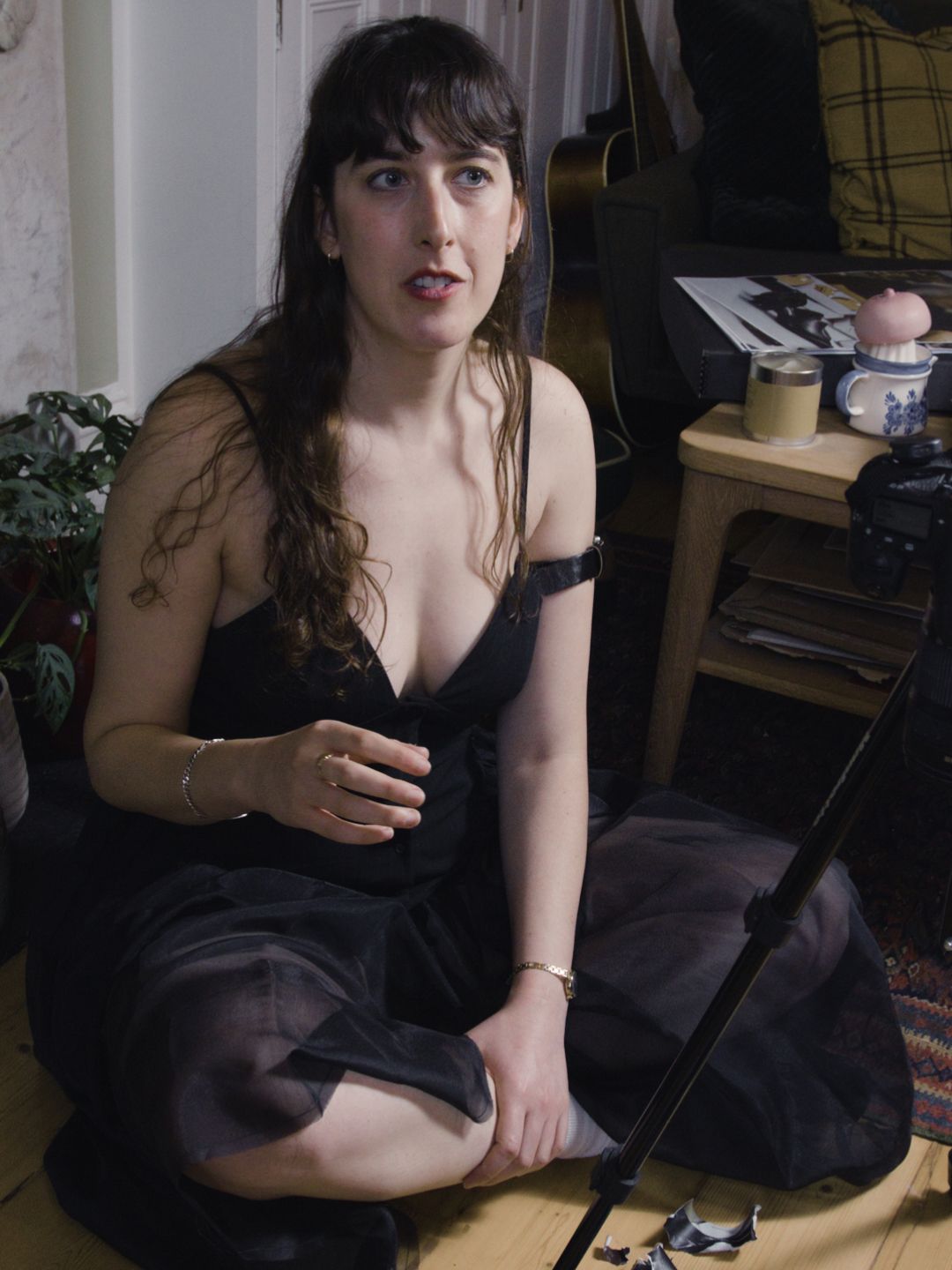
At Miista, we’re inspired by people who do the opposite thing – the pioneers who take risks, challenge conventions and make bold decisions in their life and work.
In our Inspired By series, we share the stories of these individuals, whose attitudes embody the elements we celebrate in our design, craft and production process.
MAAYAN SOPHIA WEISSTUB LOVES TO PLAY WITH HERSELF.
A multi-disciplinary artist, she uses her body as a subject to film and draw, but also to deconstruct, collage, and morph into sculpture: telling feminine stories that question the status quo and subtly disrupt systemic patriarchal conditioning.
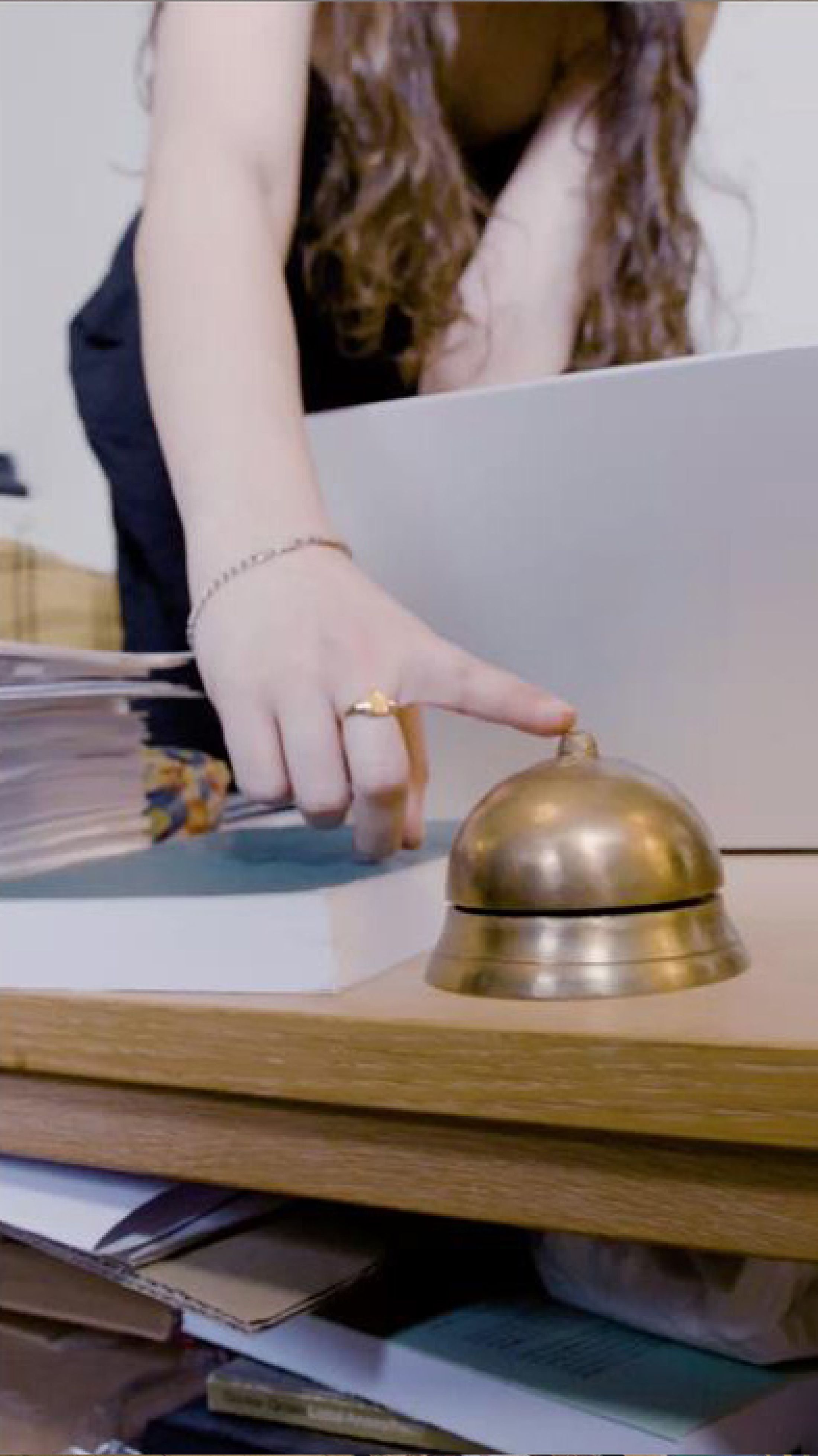
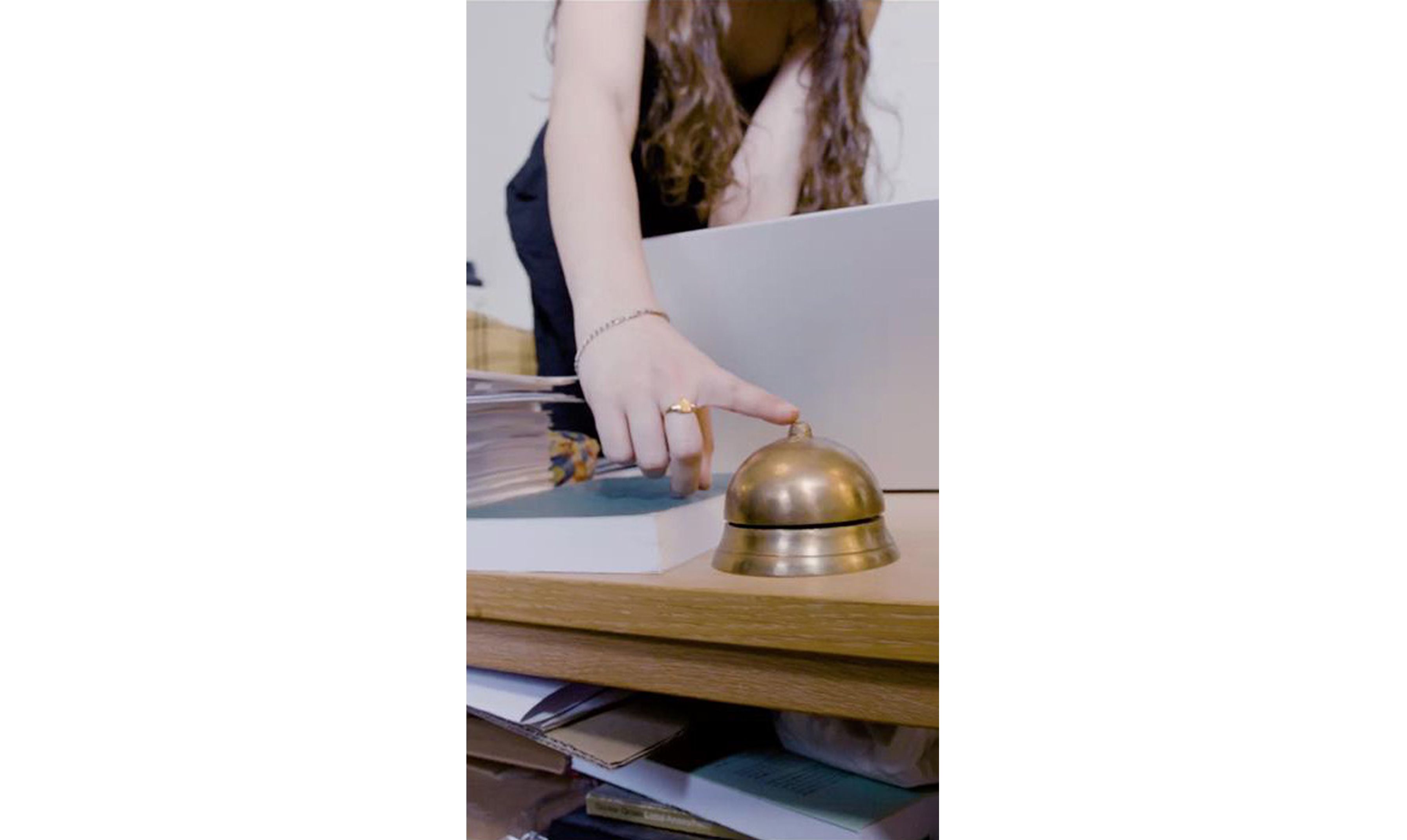
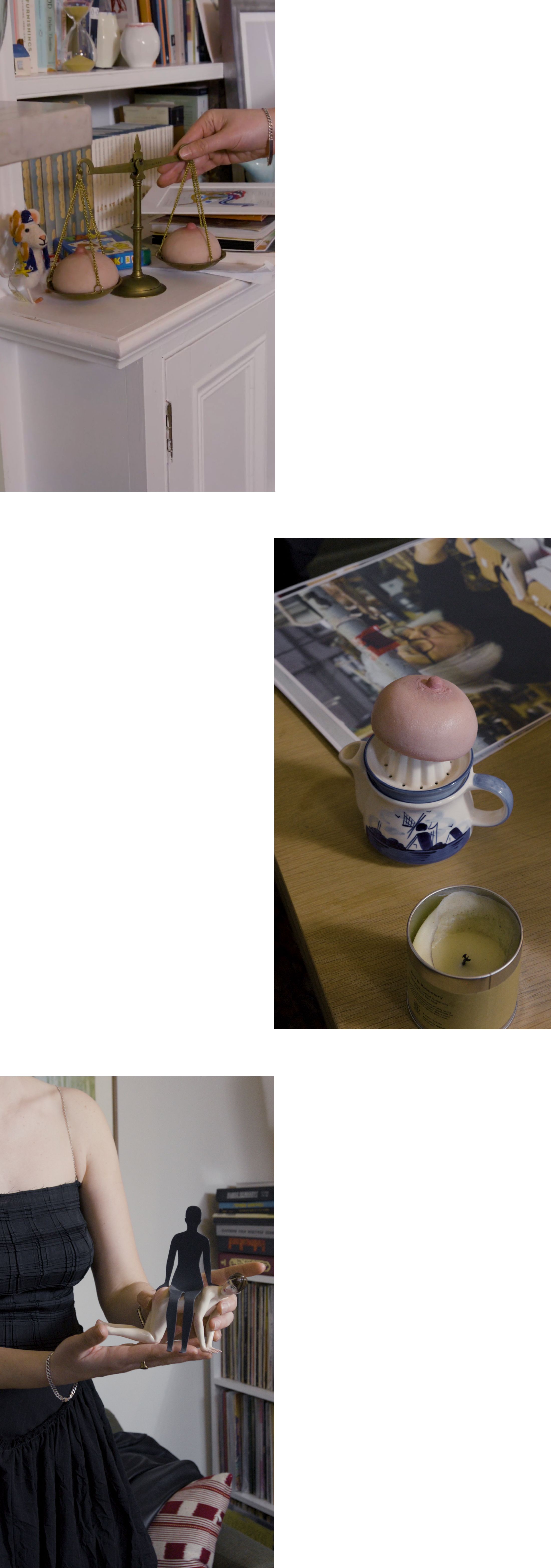
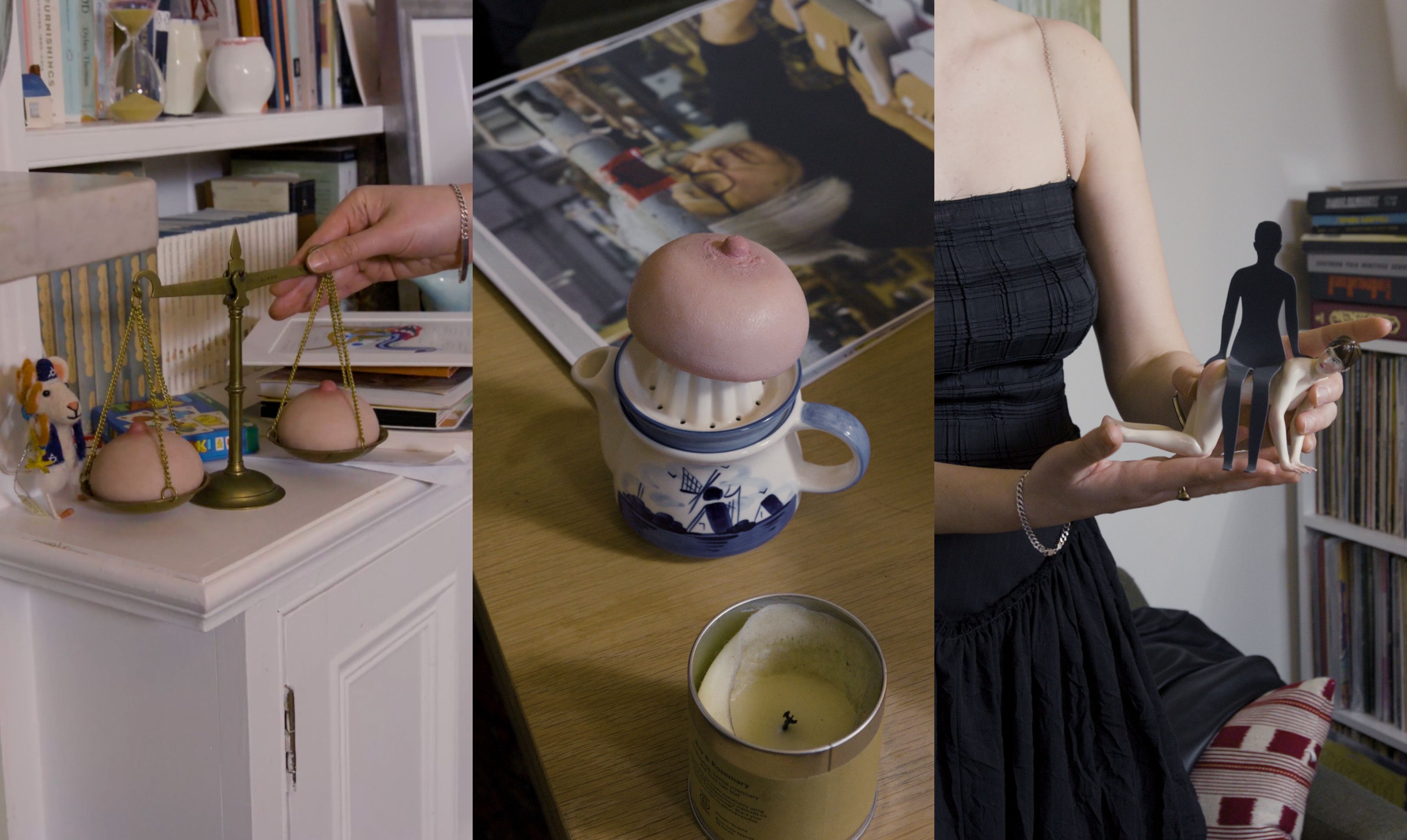
Breasts are a recurring theme in Maayan’s work. One sits ready to be milked atop a lemon squeezer – questioning the true price of milk. Another is melded into a hotel service bell – a commentary on how women are still expected to serve in society, and a pair are weighed on brass scales –
probing how women continue to be commodified and measured by their bodies.
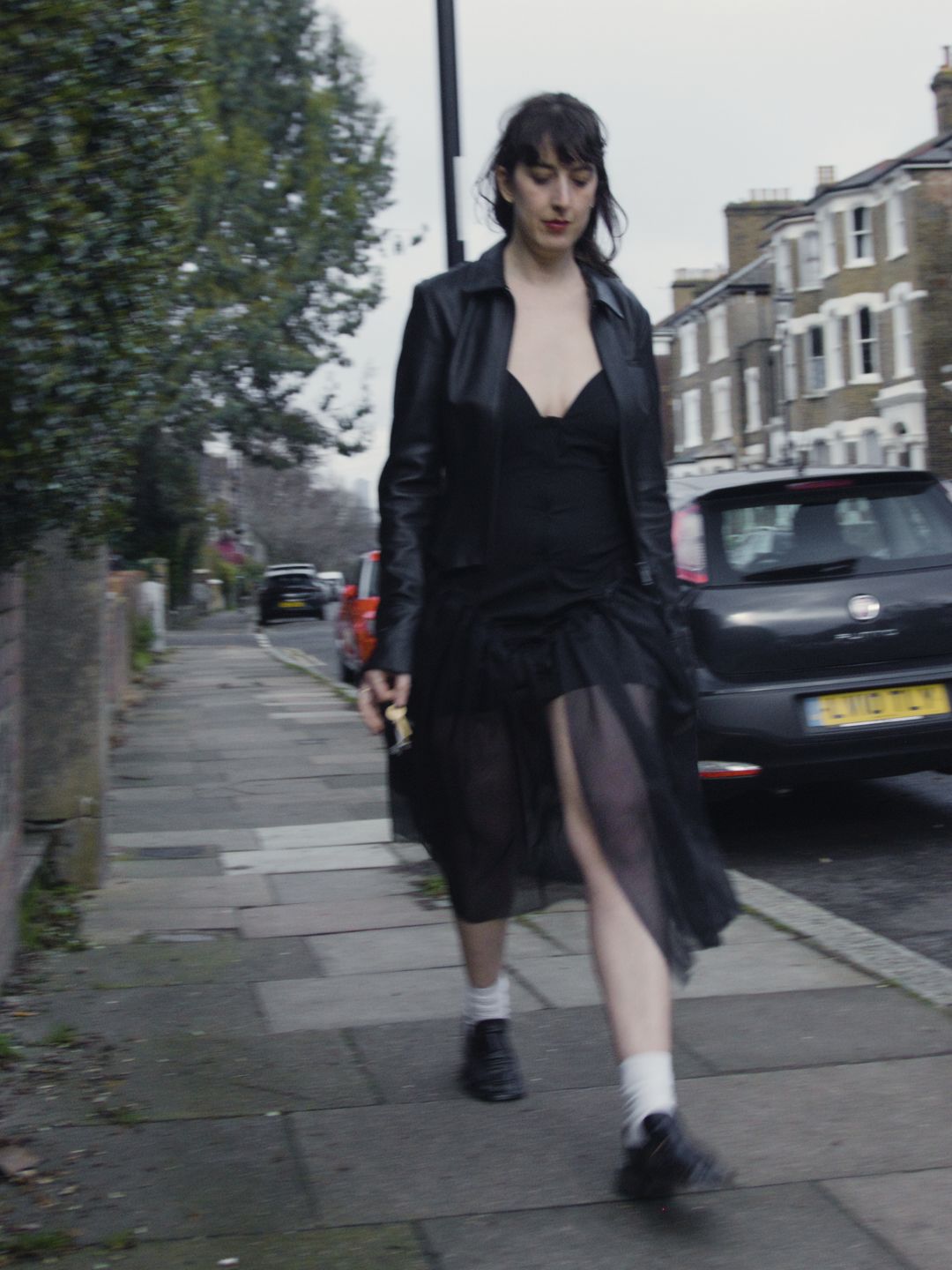
Maayan was born to Jungian psychiatrist parents, which may explain her love for surrealism, symbols and animals from dreams, the unconscious, that seep into her life and work. It was early on in life that she decided to embrace her weird girl with an attitude status.
Unafraid to take risks, she instinctively felt out what was right for her, rather than following arbitrary rules. She was kicked out of one strict middle school for disagreeing with their dogma, before finding an alternative in a more broad-minded school where film and art classes, alongside academic subjects, were on the timetable. From there she began to develop her creative voice.
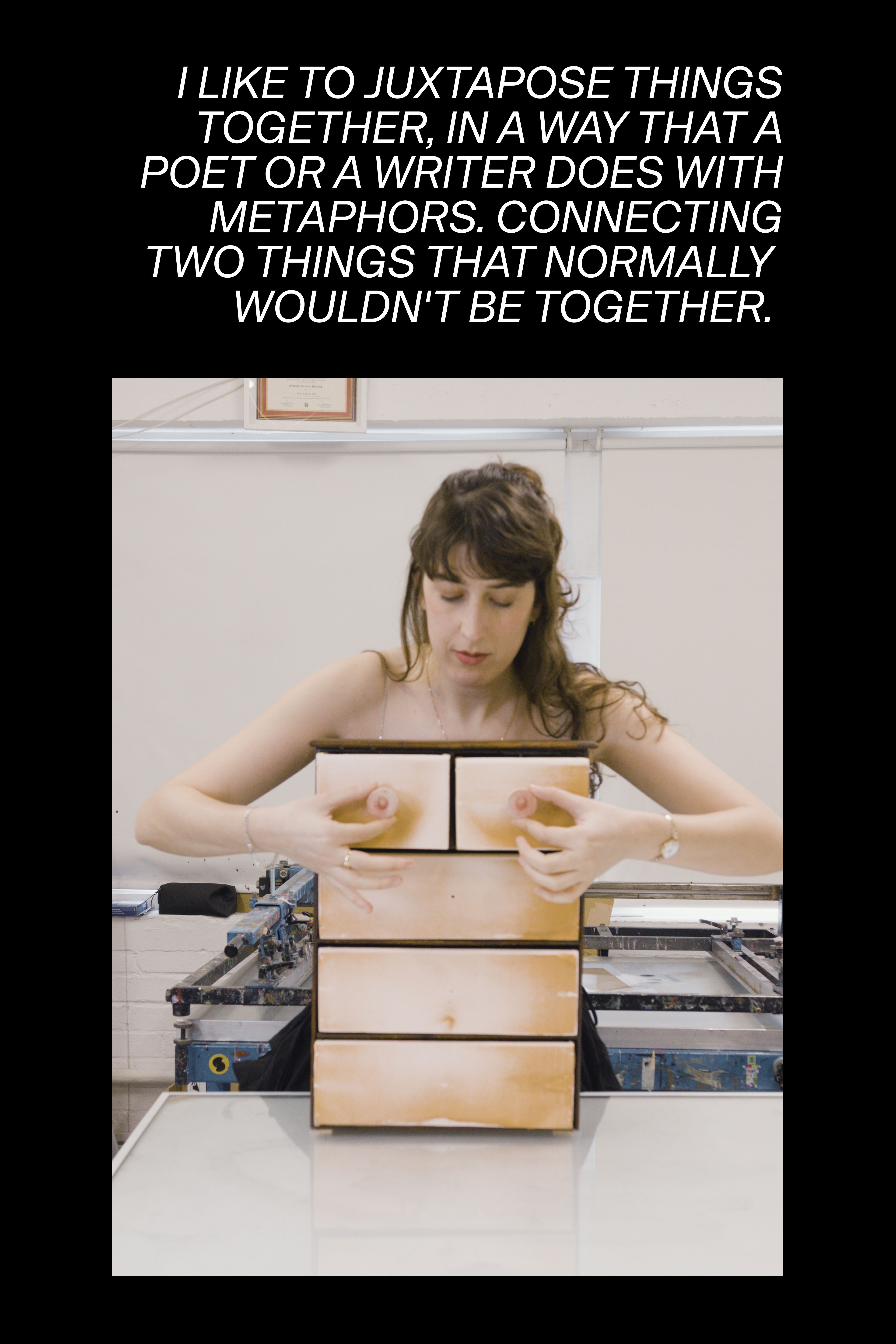
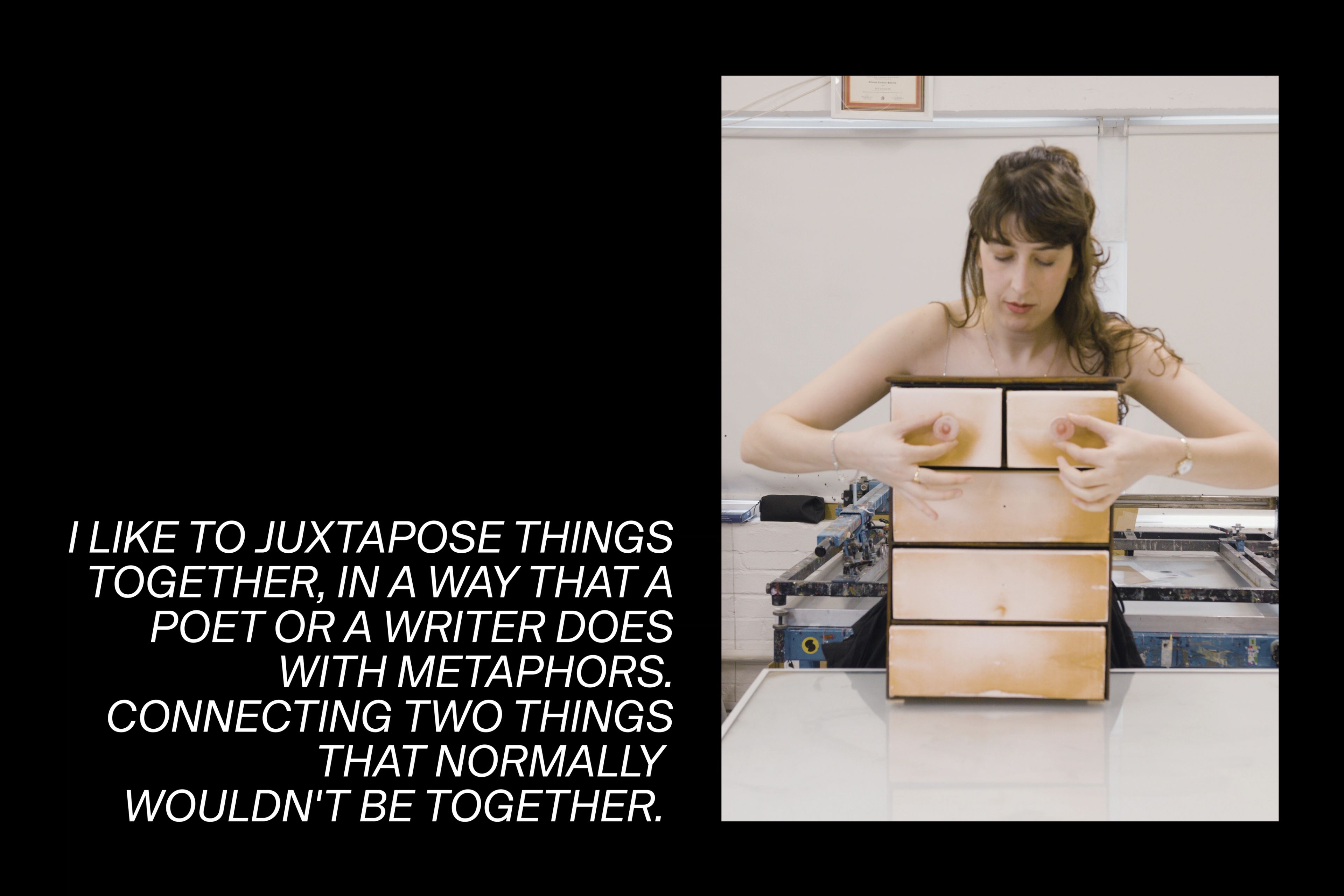
It was Instagram, rather than university, that gave Maayan space to playfully experiment with her ideas and different mediums. n her grid you’ll find deconstructed body part art. Visceral videos of teeth been cut, tongues in eyes kissing, eyelids on butts, nipples on cabinets. Maayan collaged as part-horse or as a cat feeding her young.
She has built audience of over 121,000 followers. The platform also helped her to secure a place on a master’s programme at the Royal College of Art, without a bachelor’s degree, as well as giving her the opportunity to exhibit and sell her work around the world.
ON AN OVERCAST FEBRUARY DAY, WE VISITED MAAYAN.
In her home, every surface seems to have an added layer. Postcards lean on books that jostle for space in between vases and lamps. A record player sits on dark wooden drawers, with Maayan’s records stuffed into vintage metal racks on the floor. A black and white photobooth picture of Maayan with friends is taped to the fridge next to a sequence of tongue images: one with peanut butter, another with jam that frame by frame kiss to create a corporeal PB&J. There were so many things to look at, that demand more of our attention.
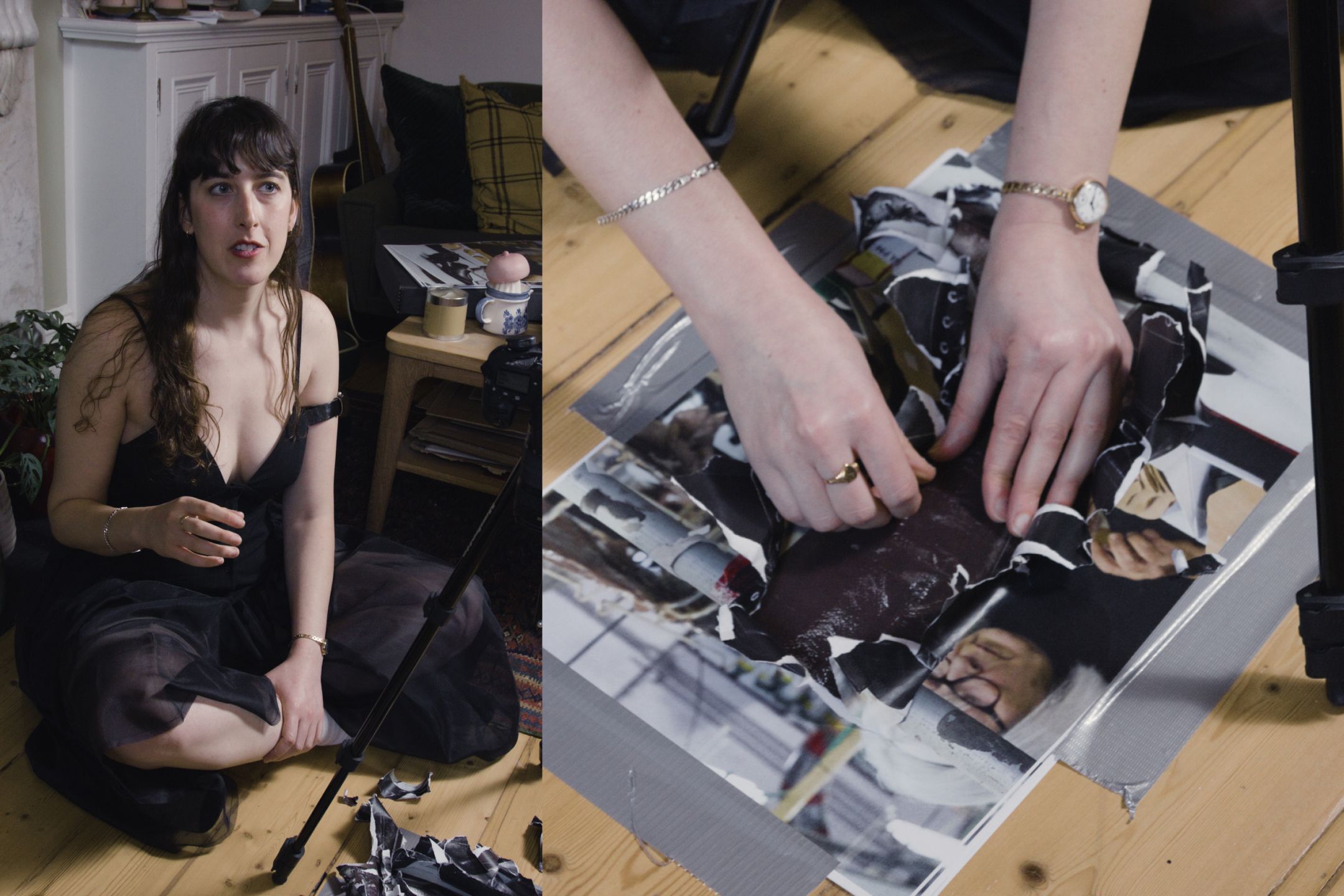
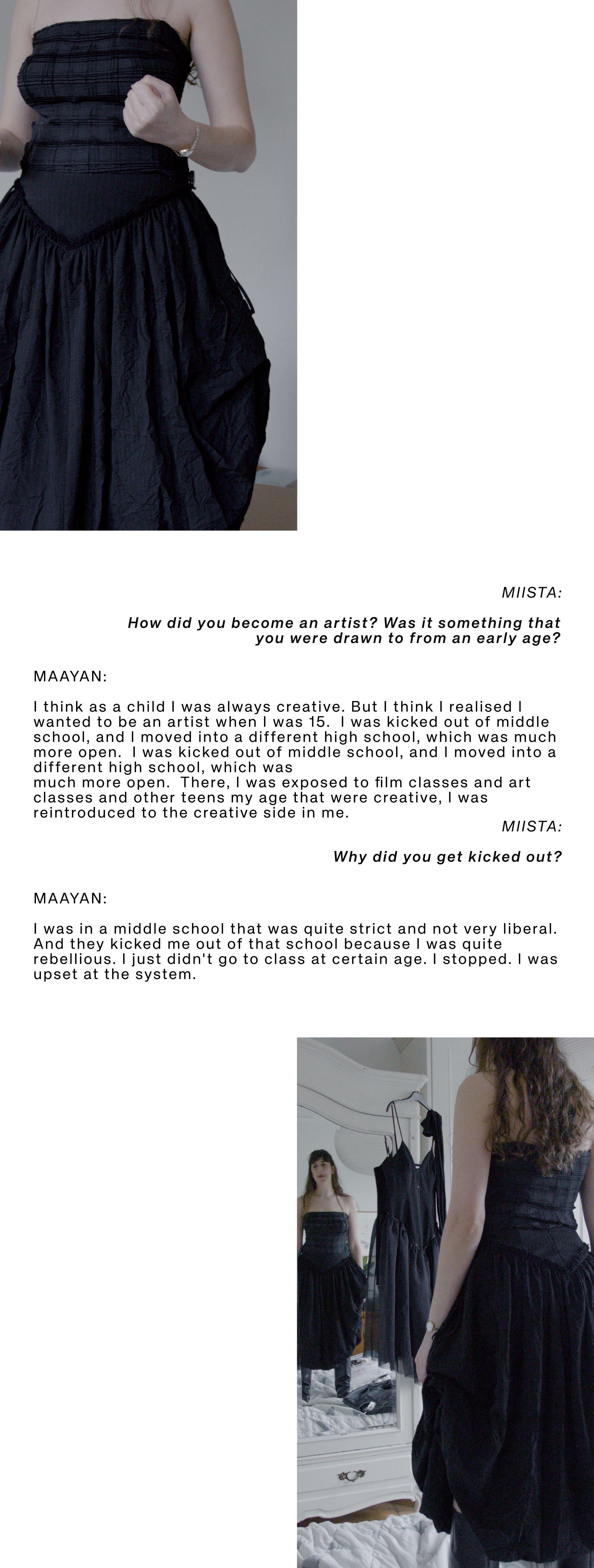
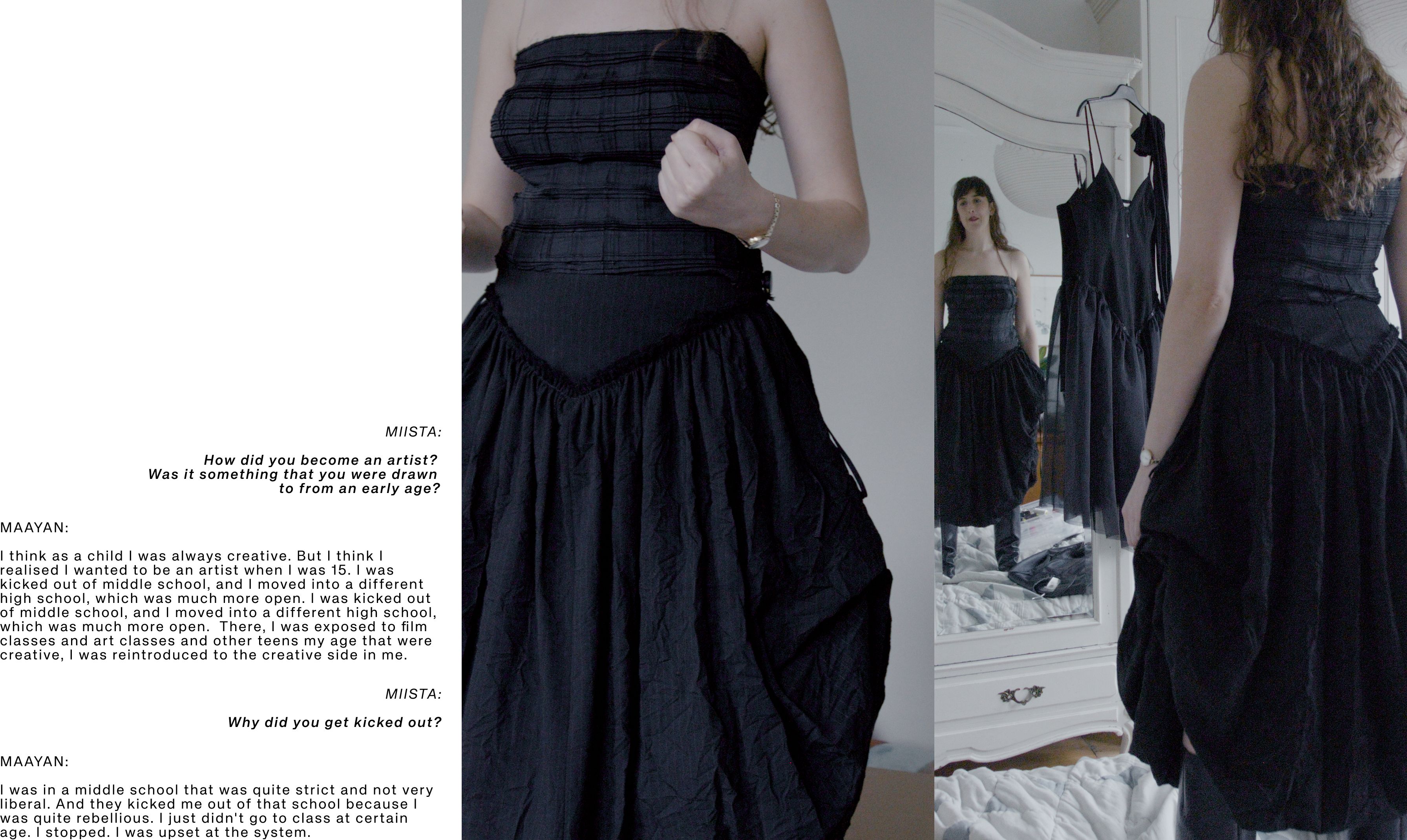
What follows is our conversation, as we spent a few hours, dressing Maayan and discussing her art, process, life and loves at her flat in a quiet neighbourhood of South London.
MIISTA:
Are you more focused on how you're feeling when you're making art, or on how it might be perceived?
MAAYAN:
It depends. Some works are made with the purpose of protest, or to share a voice about an issue that is social or political that’s when I do think about the audience a lot. Then, there's the self-portraits and things like that, that I do because I want to do it for myself. And I'm happy when people relate to it. I can feel that they've understood even though it's my body or face in the picture.
MIISTA:
How do you incorporate your body in your work?

MAAYAN:
I incorporate it a lot because it started off as being the most immediate and available thing to use. It is easier for me to speak through and show a body that is mine.
I look at objects or parts of the human body and what they represent or what they are to different people, cultures, to me. I like to juxtapose things together, in a way that a poet or a writer does with metaphors. Connecting two things that normally wouldn't be together.
MIISTA:
There are a lot of breasts…
MAAYAN:
There are a lot of breasts in my work. It's something that symbolises fertility, femininity, nourishment to me. I'm not a mother, so not like a mother with a kid necessarily, but more like a mother as an intuitive force that we have as women. And of course, it's also sexual and something we're measured by a lot.
MIISTA:
Tell us about the bell.
MAAYAN:
It’s new work called Mazos, which means breast in ancient Greek. It’s a service bell that resembles the female breast. The Amazons would have cut their breasts to be better in archery. I wanted to take the bronze, which is associated with armoury, weapons and power, and melt it, mesh it in with a female breast that is soft, nourishing and feminine. But also, it's a service bell. So, it’s also the fact that women are expected to be in service for men, or in society, in general.
MIISTA:
Are you looking for an idea first or the medium first?
MAAYAN:
It's a funny question because a lot of people ask me how I think of an idea or where an idea comes from. Most of the time I think ideas just come. I do know sometimes it comes and it's a complete thing. I see a finished object in my mind or piece of work.
I like when the work speaks for itself, but as a person I have a lot to say. I like people having the option to get more of what I meant to say. It's not just a random visual idea. It's more than that to me. I think in a lot of my work, the context is super important because they can seem erotic, which they are sometimes, but they're much more than that.
MIISTA:
More generally, do you find yourself drawn to particular objects?
MAAYAN:
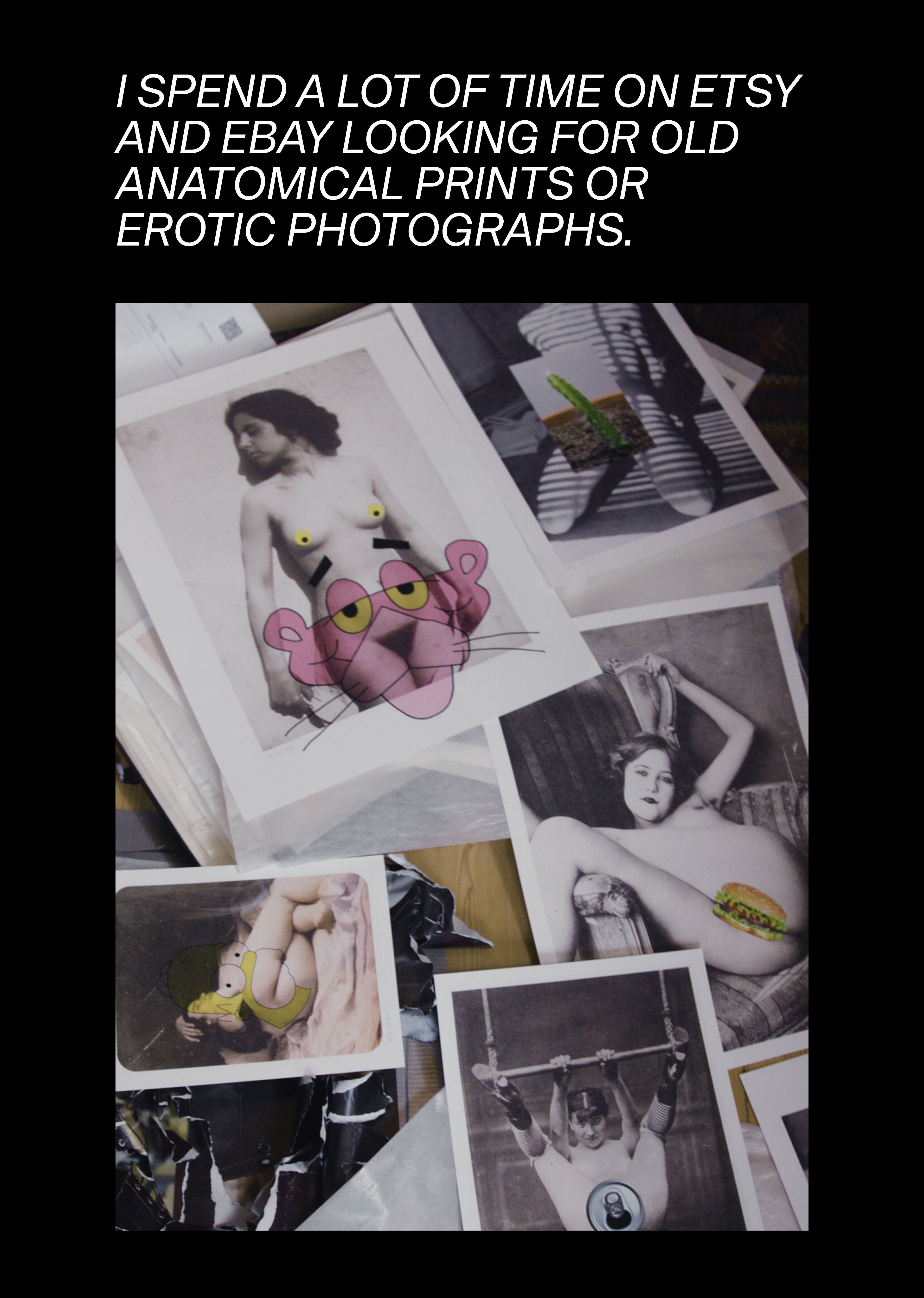
I'm drawn to all kinds of objects. I love finding them in antique shops or on eBay. I spend many hours on eBay looking for old objects because I find them very interesting, the history that they hold within them.
I did a piece called Mnḗmē which was an installation of objects that are all breathing. With those objects, I wanted them all to be from the fifties, that was when my father grew up. It was all about him passing away and the kind of things he left behind.
MIISTA:
What makes London feel like home?
MAAYAN:
I moved to London in 2019. It was for my master’s at the Royal College of Art. I studied information experience design, which is surprising because it's not fine art. I wanted to study something that would be more theory heavy and experimented with different mediums. I moved for my studies, but I loved London and decided to stay.
MIISTA:
And I see you're into music and records?
MAAYAN:
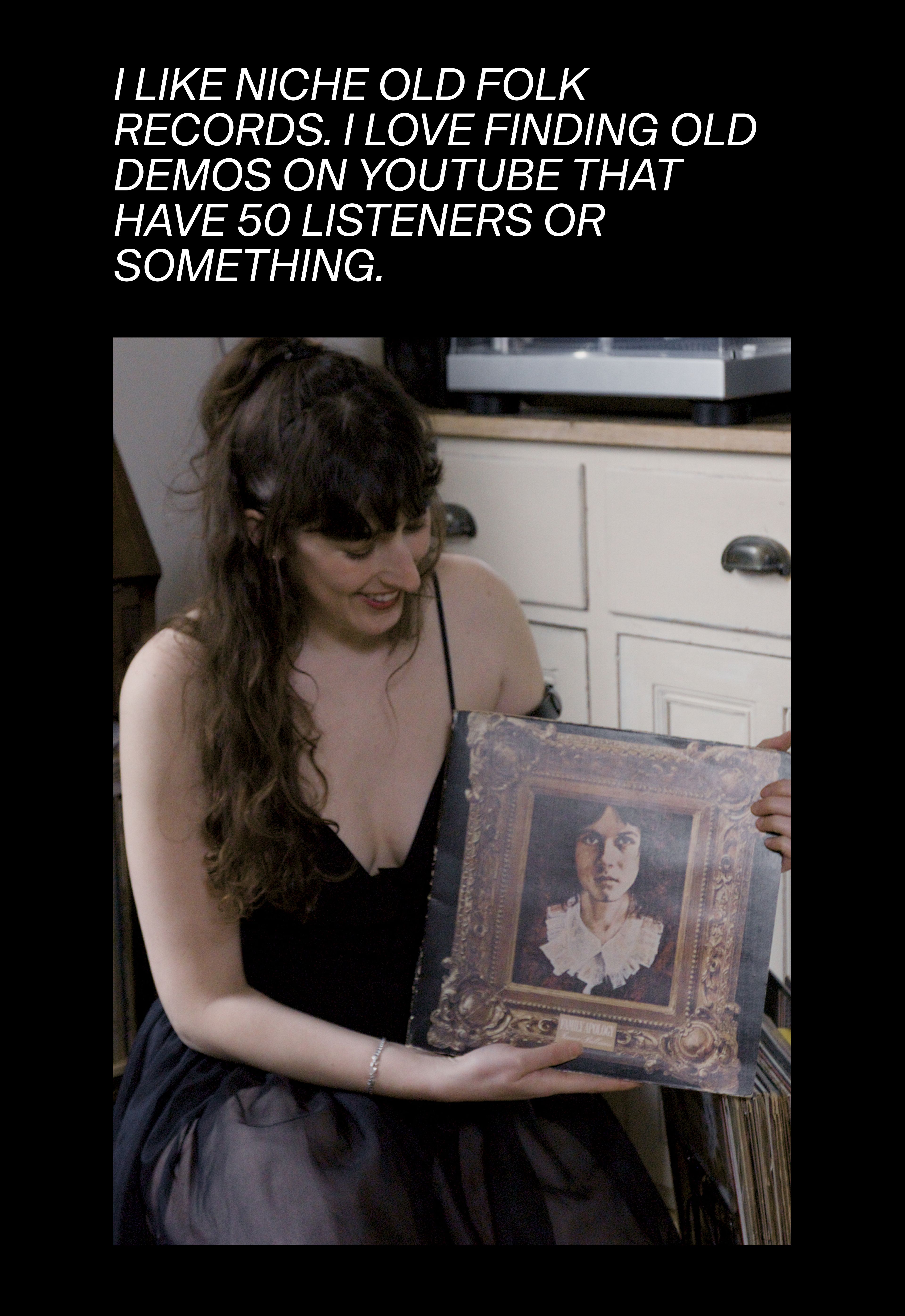
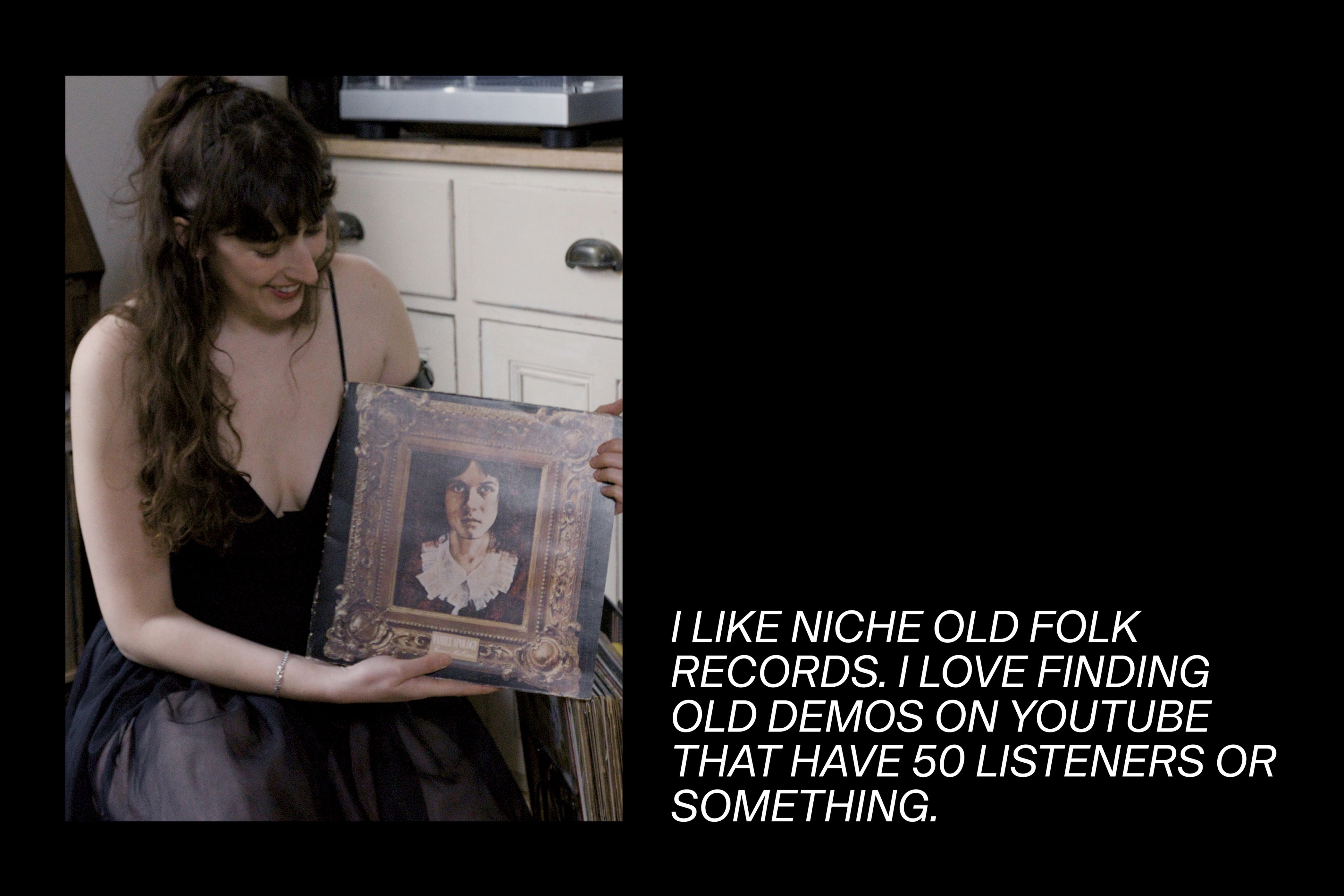
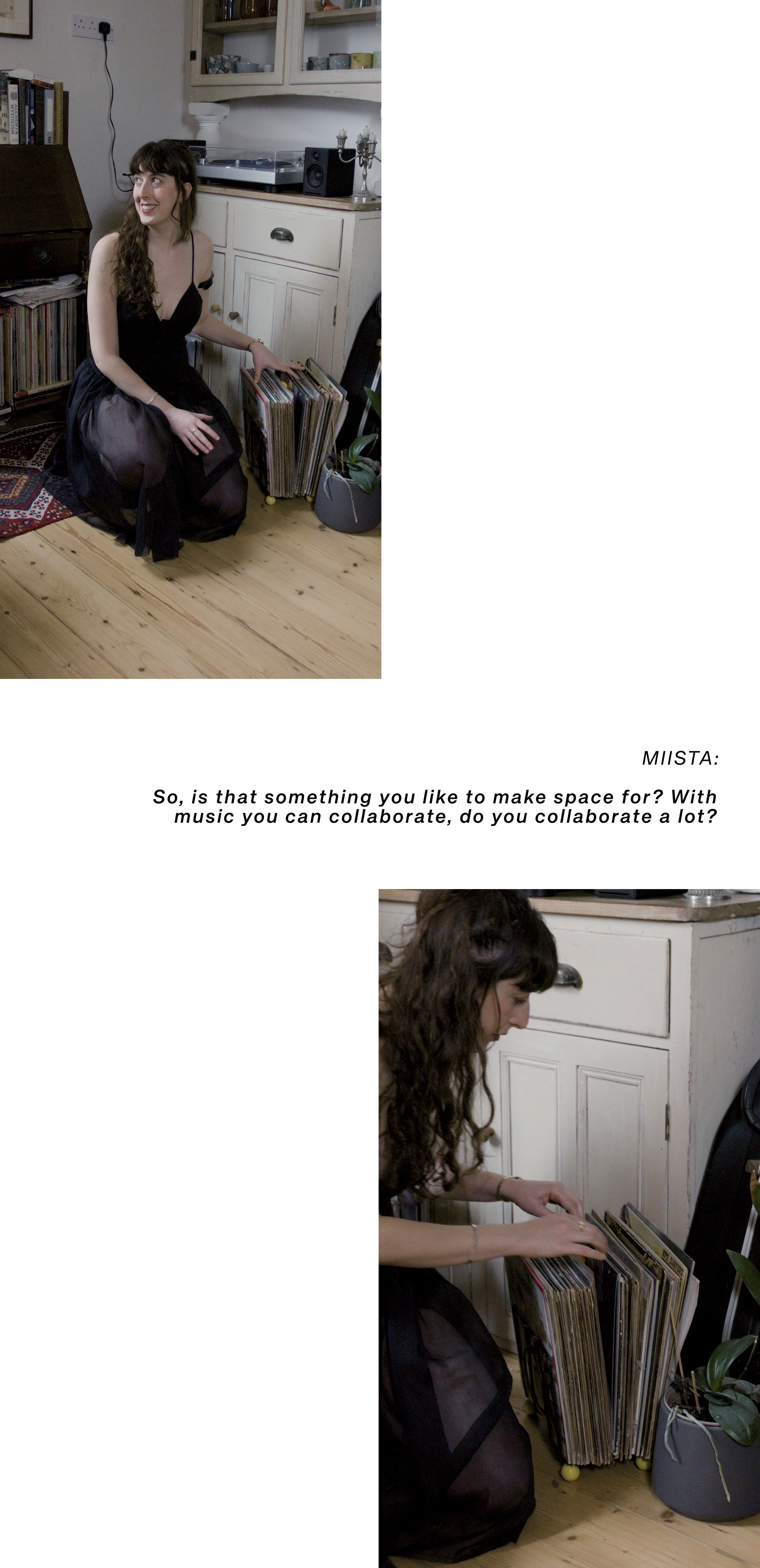
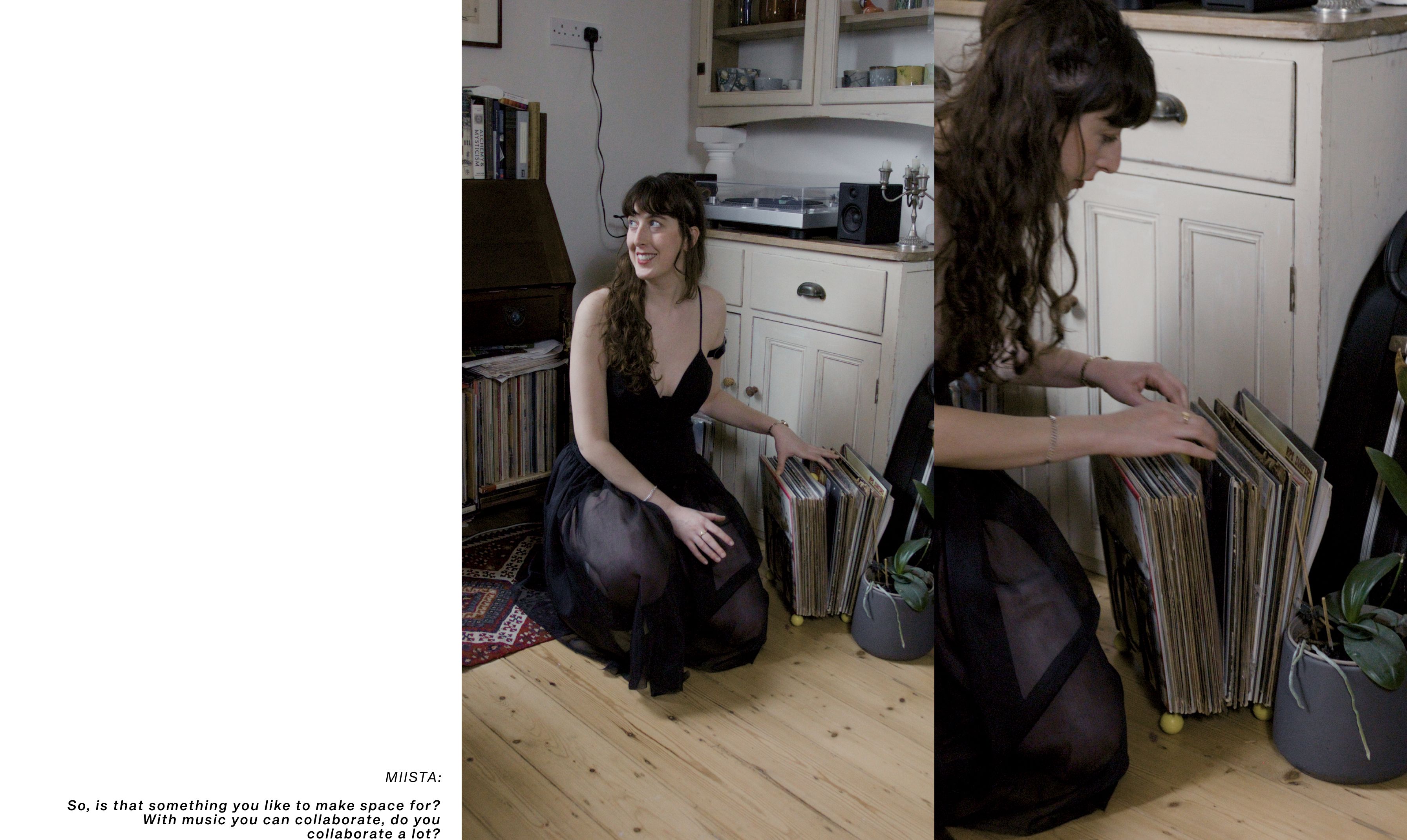
I used to play the cello when I was a kid for seven years. Then I played the double bass later in life. I love Jazz. I like niche old folk records. I love finding old demos on YouTube that have 50 listeners or something. And I do still play the ukulele sometimes.
MIISTA:
Is that a folk thing?
MAAYAN:
I would call it punk ukulele. Yeah, more The Raincoats style of ukulele. My favourite one is this one. (Maayan shows us a record). I'm really bad at remembering all the details, like some people do, but this guy is Trevor Billmuss, and I can't find anything about him online, just this album. But I think it's really, really good. It's stimulating intellectually as well.
I like the mystery of people from the past, especially ones that aren't discovered yet. Sometimes when everybody loves the same artist, you don't feel like it's yours so much. When I discover these artists, that not many people know, I feel like I’ve found my own musician. The demos have this raw quality to it, something that’s not too polished. I love that. Some of my more intuitive work that I do, like collage, when it's too perfect for me, it loses some of that edginess.
MAAYAN:
I used to have a band back home and we had an album. I think I was fortunate to have a bandmate that was a professional musician, a super guitarist, and we were having fun with different instruments, meeting with other musician friends, jamming together. And I do miss it because here I don't do it as much.
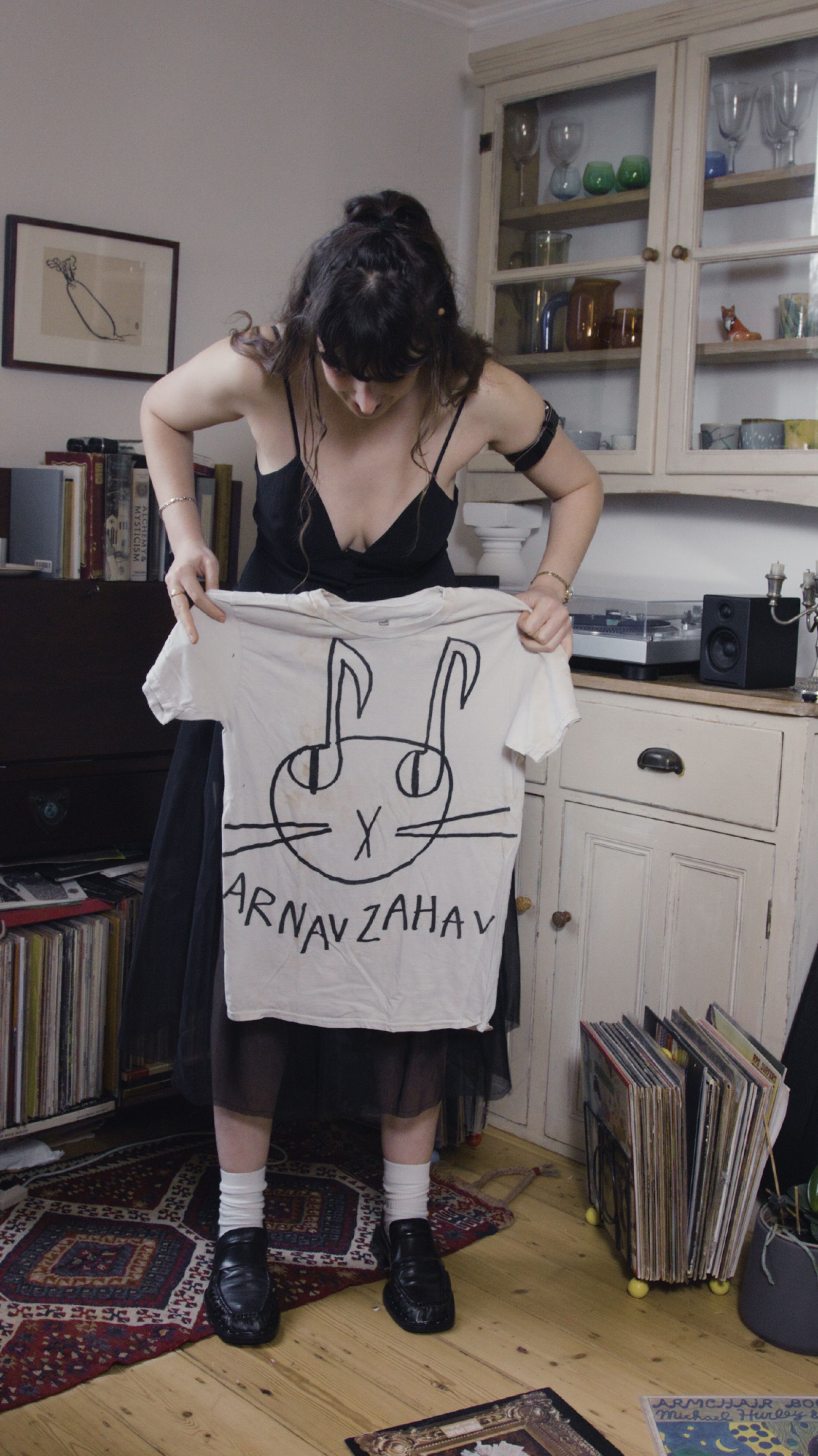
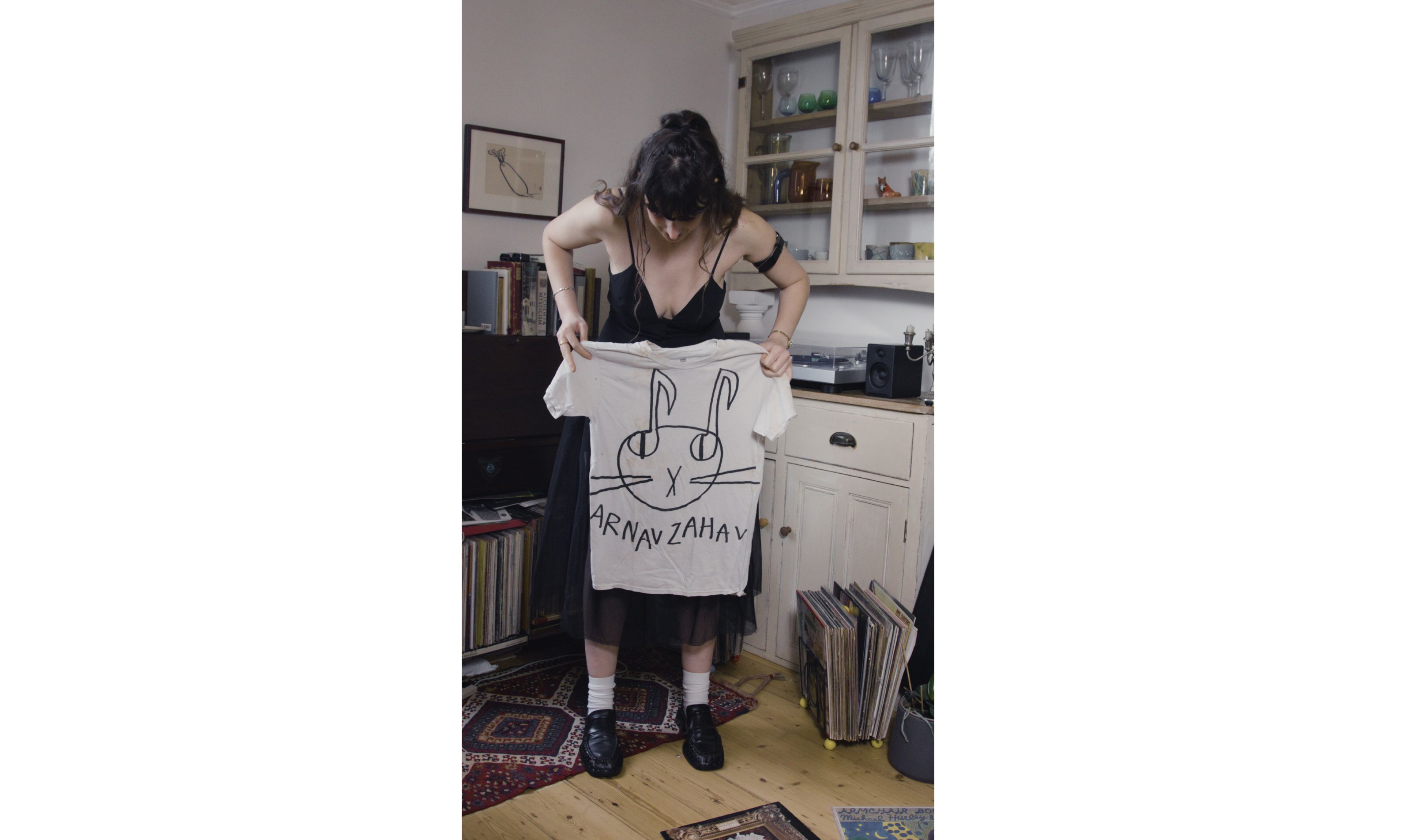
The band was called Arnav Zahav, which means Golden Bunny, and it rhymes. And this is t-shirt, but it's a bit dirty from wearing it while in a painting class. We had very simple lyrics, a bit of Daniel Johnston vibe. The logo even looks like a Daniel Johnston drawing.
I also did a master's in children's literature, So, I love children's books, and I write for children, for four- to eight-year-olds.
THE BAND WAS CALLED ARNAV ZAHAV, WHICH MEANS GOLDEN BUNNY, AND IT RHYMES.
MIISTA:
Do you make space for other collaborations?
MAAYAN:
Usually the collaborations are with craft people. I'm quite like being in charge of the idea and the direction of the process. I do enjoy collaborations like what we're doing now, where I can still express myself, but it's with someone I appreciate and where I can contribute something. If I trust the other collaborator, it’s a thing I would like to do more in the future, but I haven’t done it a lot.
MIISTA:
What do you look for when you're collaging? It feels like a process of creative destruction, you have to break something to make something.
MAAYAN:
Yeah, and I love the revealing, it’s like when you dress in layers as well. What will come next and when will you get to the end? It's the revealing, and then it becomes kind of animalistic. It's all a bit wild.
MIISTA:
Does that all come from going with how you feel?
I PUT A LOT OF SIGNIFICANCE ON SYMBOLS AND DREAMS.
MAAYAN:
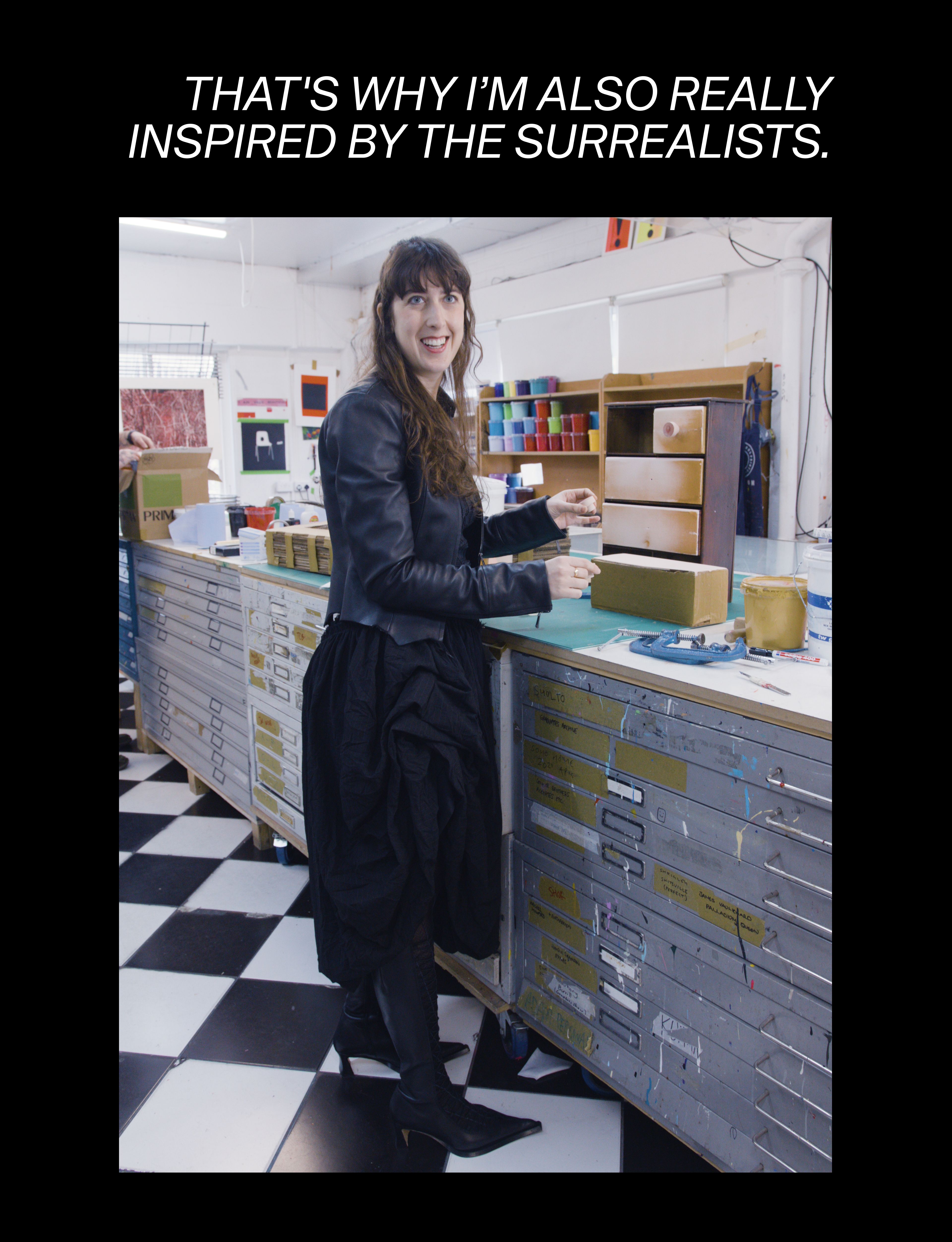
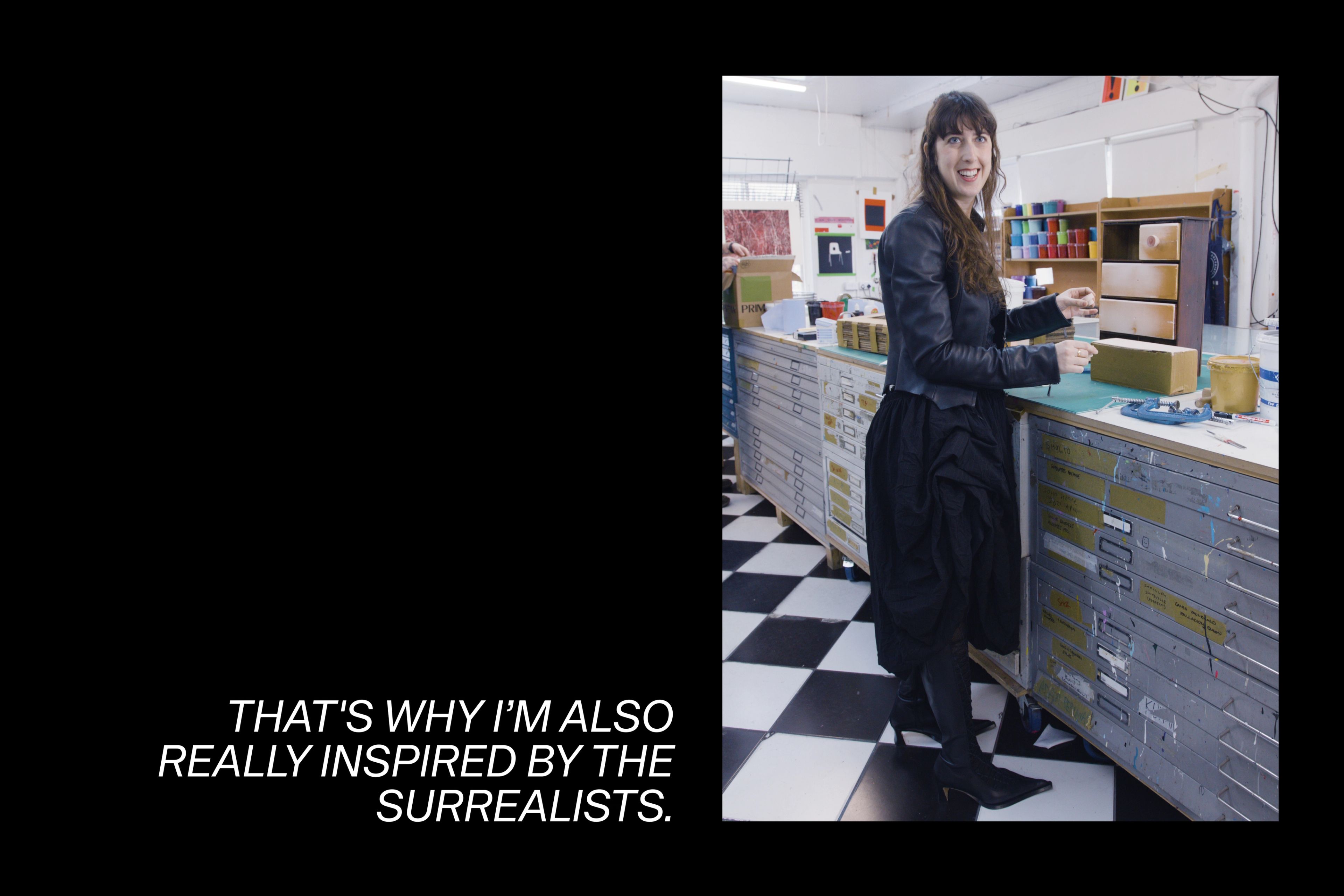
That's why I’m also really inspired by the surrealists. The animals, I think, are part of that. They're just other things to give more depth and interpretation.
MIISTA:
What role does social media play in your work?
MAAYAN:
Social media has helped a lot with my career, so I can't say it's only bad. I have a love-hate relationship with it. I started uploading art to Instagram when I was about 19, which was quite early for artists to do that on Instagram, and I think I was fortunate to be one of the pioneers. It gave me a lot of followers early on, and later opened doors for me to exhibit worldwide, to sell works to people abroad. And later, to build a CV that was when I was accepted to the Royal College without a bachelor's degree.
MIISTA:
It democratizes it a bit, doesn't it?
MAAYAN:
I think in a way, social media for artists allows you to self-promote and curate a narrative for your story or your art. But it can be dark too. I had people that are more from the art world say, ‘well from your Instagram we can’t fully understand what you’re about, you have so much stuff.’ But I don’t want to change that. I don’t think you should be one-dimensional or just do one thing. But if you can inspire people, influence people, expose them to your work, it’s quite a nice thing.
MIISTA:
Do you use technology in your work?
MAAYAN:
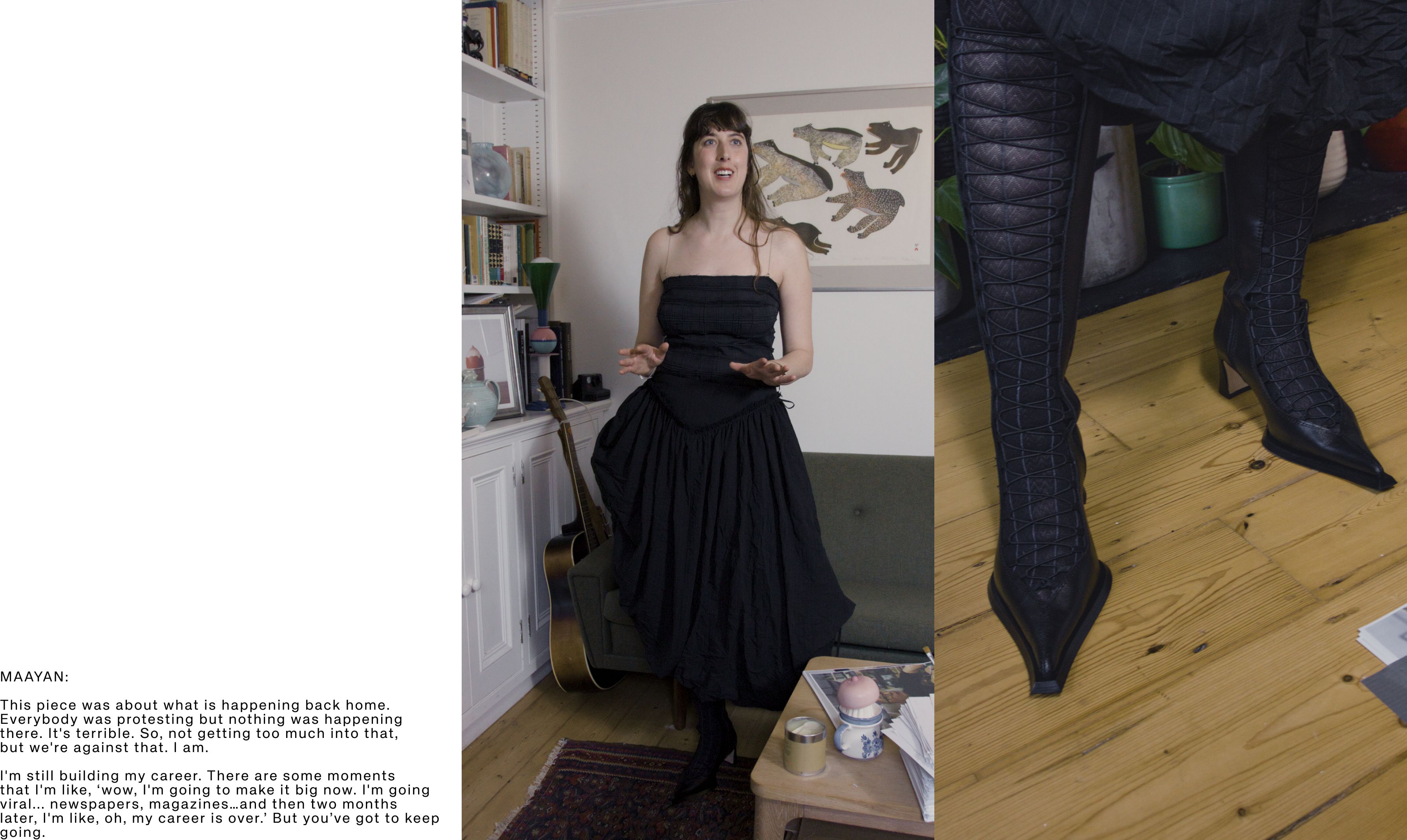
I do use technology in my work. I feel like it's very contemporary. I feel not talking about it or dealing with it is a bit like not being exactly here now, where we are. So, I made a filter that made me look like an antisemitic portrayal of a Jewish person. Instead of making me prettier, like making my nose smaller and my lips bigger or whatever, it made me look like a witch. Like how they would define what a Jewish person looked like. I'm Jewish, but I think most minorities could do a filter like that.
MIISTA:
It's like the beauty industrial complex, isn't it? Everything becomes homogenized, and you start to wipe any personality from the whole process.
MAAYAN:
I think there's some fashion that makes people feel like they're supposed to look and be a certain way, which makes people lose a bit of their individuality. But then, on the other hand, I don't want to say anything against the people that feel more confident or safer being like that. But for me, I feel comfortable being a bit different. Beautiful is very nice. I don't know what ugly is really, but imperfect is something that I would probably look at for longer.
MIISTA:
Have you been collecting for a while?
MAAYAN:
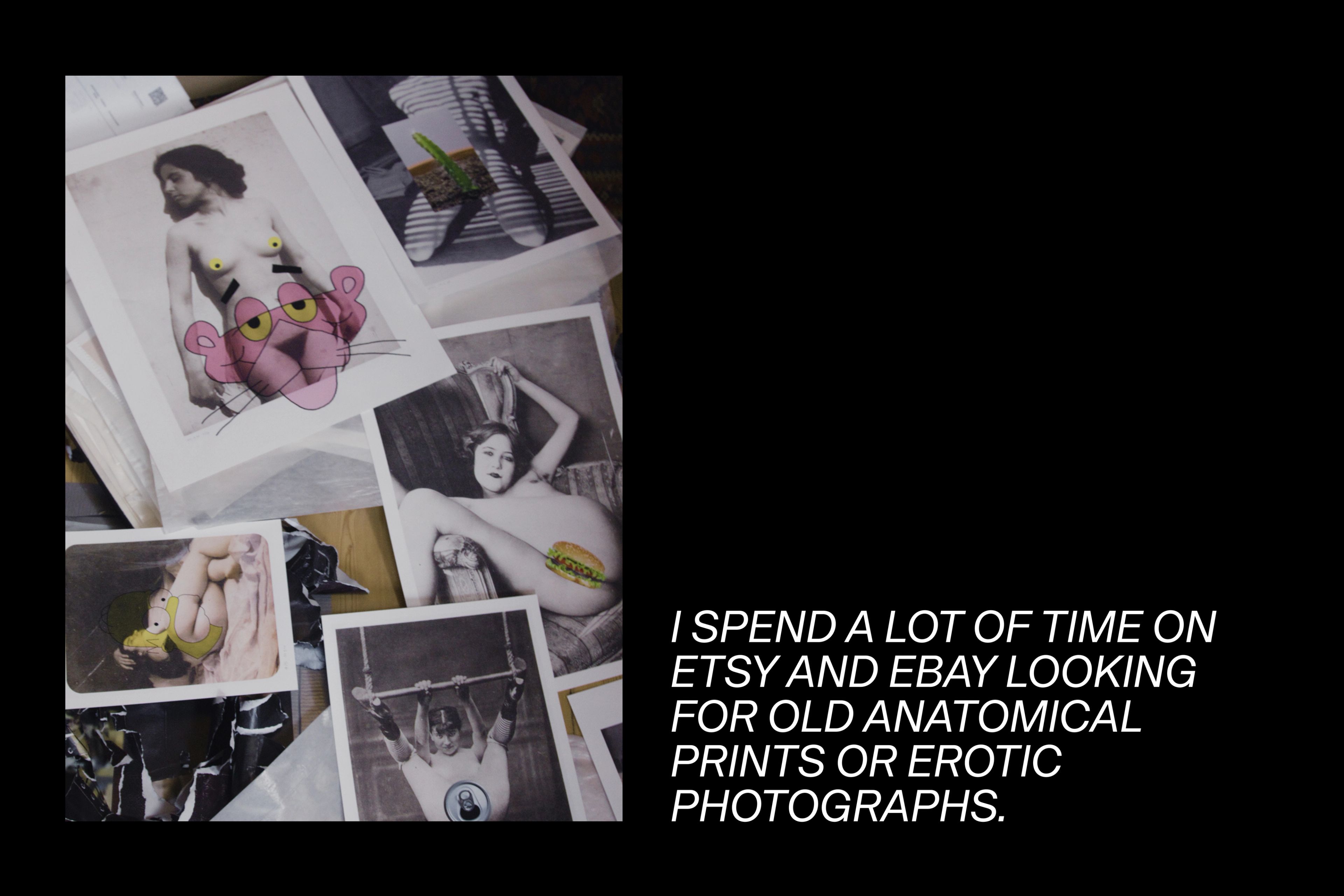
I love vintage medical illustrations and anatomical ones. In art history so many times we have the male gaze representing women. I feel like it's fun to have a female look at the men as well.
MIISTA:
Tell us about your interest in witches.
MAAYAN:
From a young age, I was very interested in spirits and paranormal activity. I love folklore and old mythologies. I think witches have a strong presence in a lot of cultures.
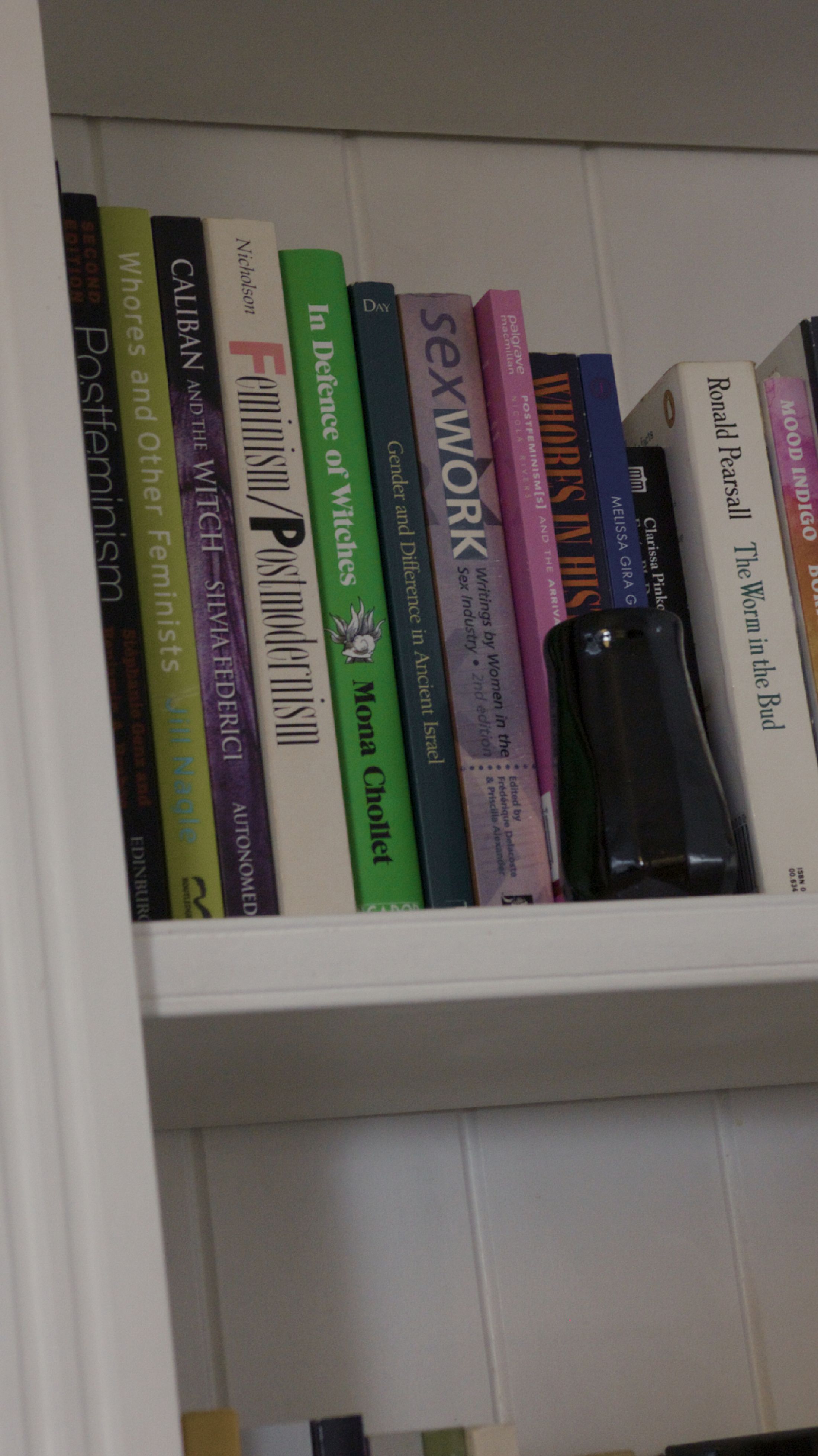
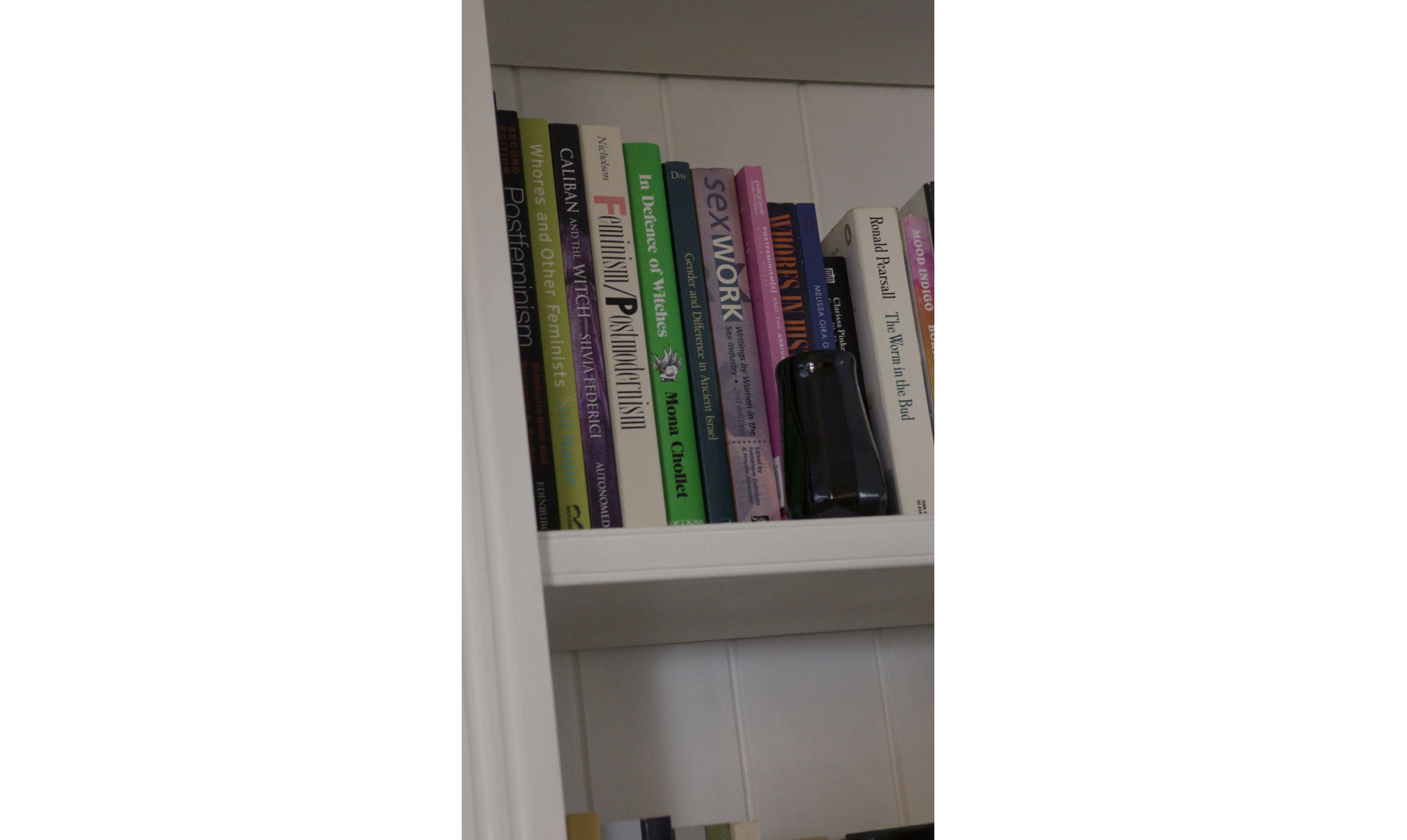
And it’s fascinating. There’s a kind of correlation with sex workers. This is what my dissertation was about sex workers and witches. Independent women. Women that didn’t want to conform or get married or have kids were executed because of those reasons.
MIISTA:
What was the outcome of your dissertation?
MAAYAN:
It was a comparing of the two, with a Jungian kind of lens. It was also talking about the mother figure, the witch, different things in that. I don't think I said anything new, but I learned a lot.
MIISTA:
Finally, we would love to see more of your work. Can you talk us through some of it?
THIS SCULPTURE IS CALLED THE PRICE OF MILK. IT’S ABOUT HOW BREASTS ARE MEASURED.
MAAYAN:
The squeezing one was for a video, I put milk inside, in a sponge. It’s about how society expects females to have so many roles, something to be attracted to, to take care of their family, or to do the domestic work. So, at the end of the day, a lot of women just feel exhausted and drained.
Then we have my shadow. It's me and my shadow. Like I said, my parents are Jungian psychiatrists, and the sculptor is like my shadow, and the burden of my shadow on my back. But at the same time, it's not as big as me and I can handle it.
AND WHAT WE’RE LEFT WITH IS THE SENSE THAT MAAYAN IS UNAFRAID TO BE MANY THINGS.
She is an artist, a woman, a witch lover, a punk ukulele player…who uses her body as a tool of creative expression. It’s about the way you do what you do, as she transforms the everyday into something new. Making art that offers an alternative, a feminine perspective, that asks us to question the everyday.
SHOP SS26 WORN BY Maayan Sophia Weisstub
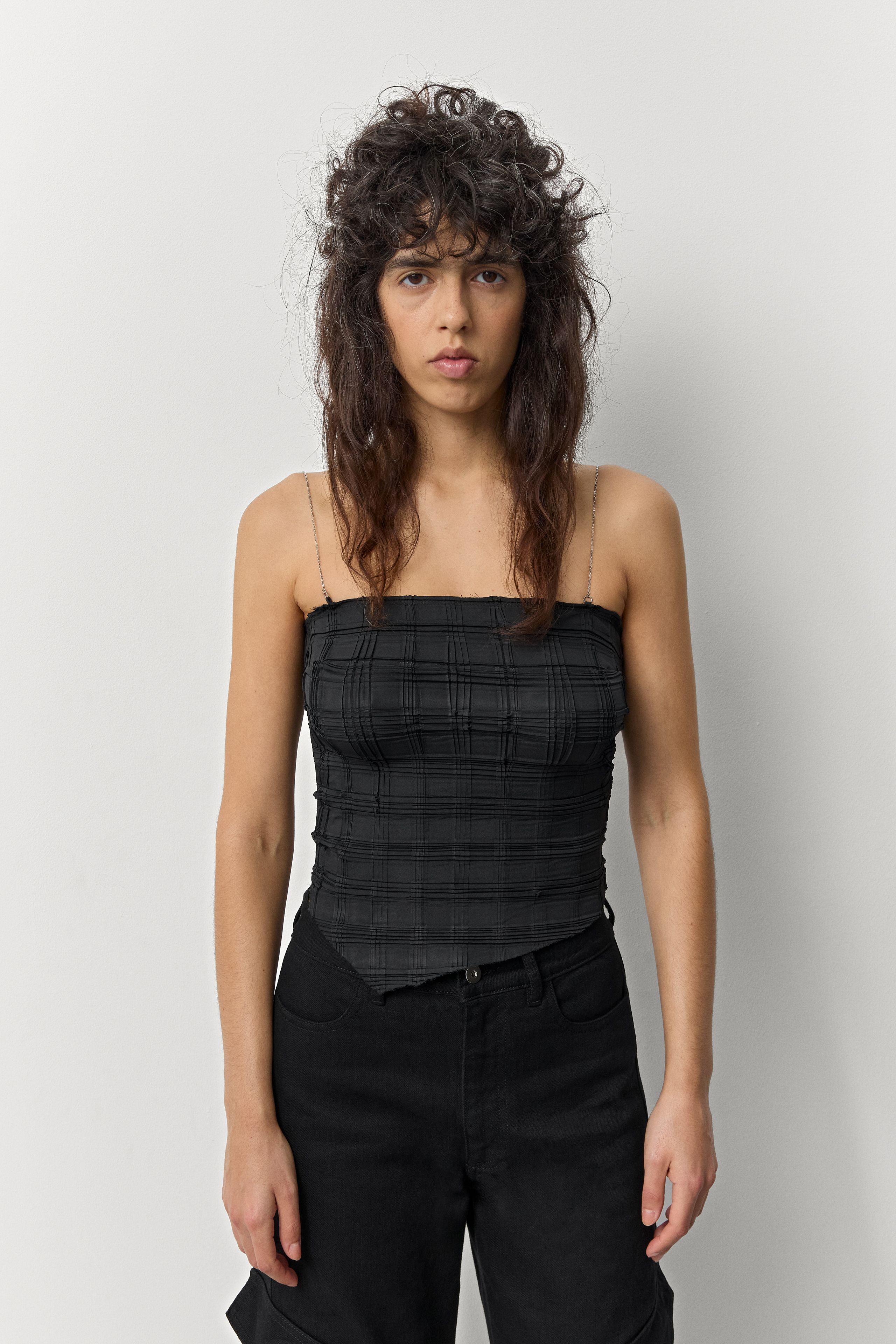
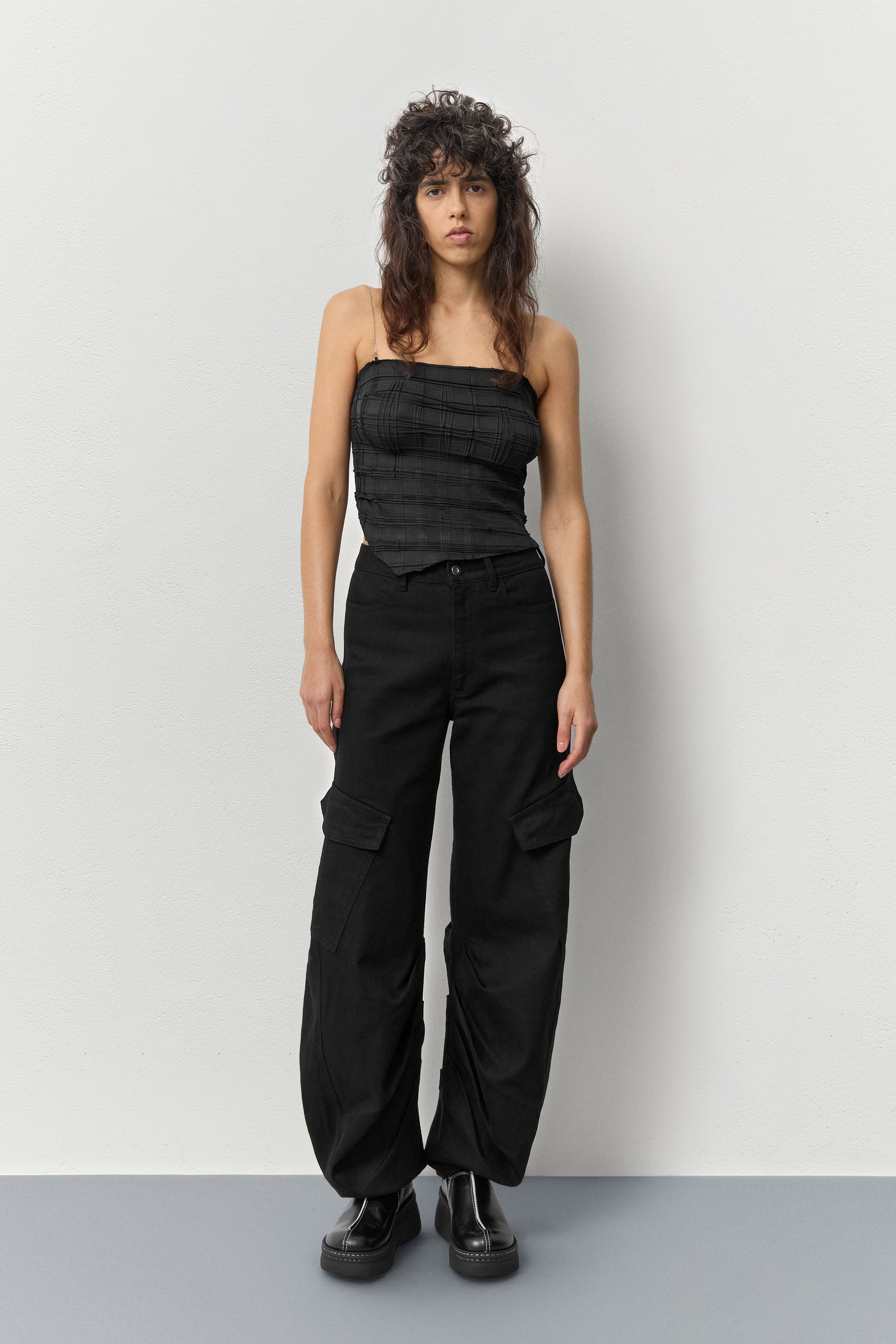
Maryam BlouseBlack Pleated
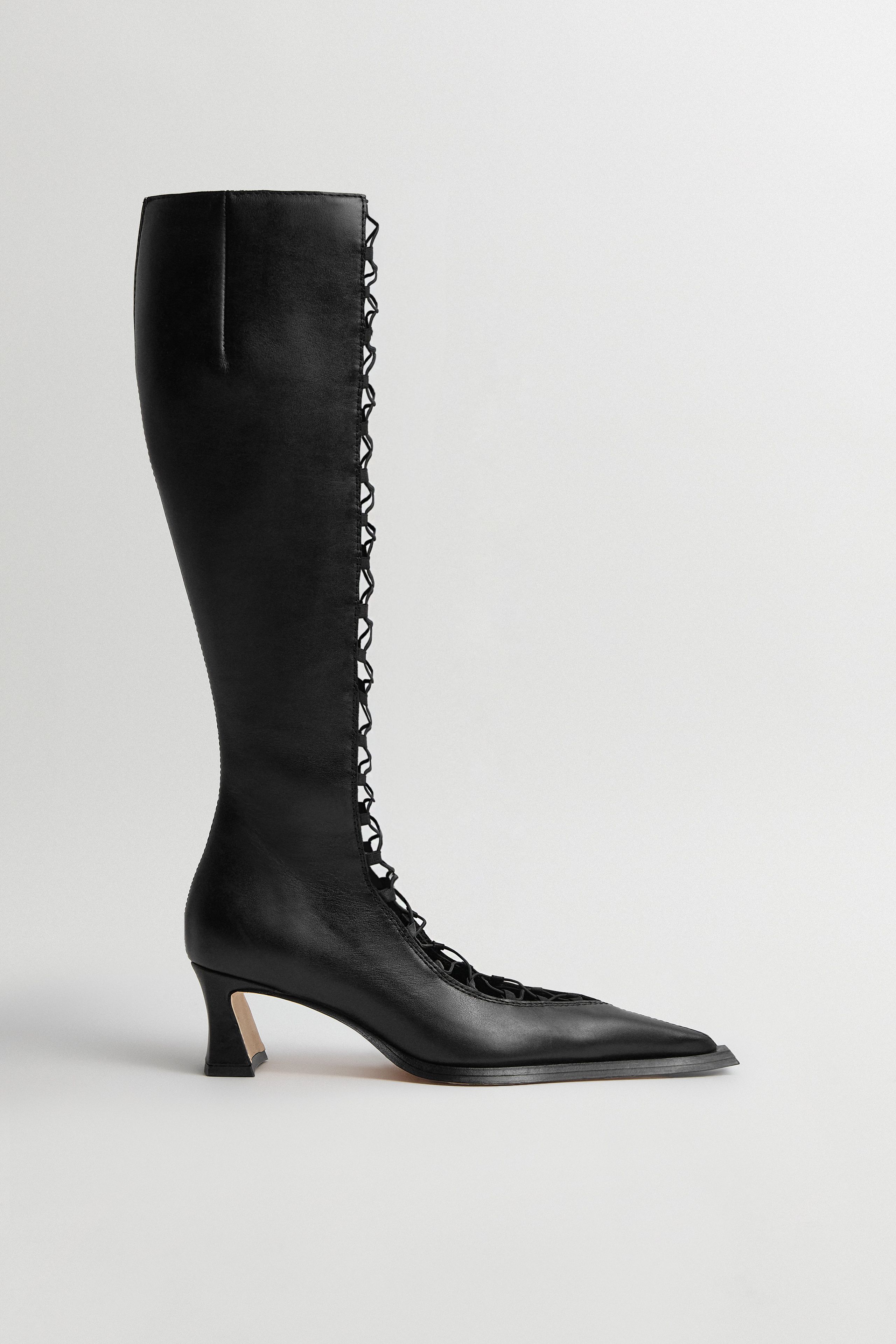
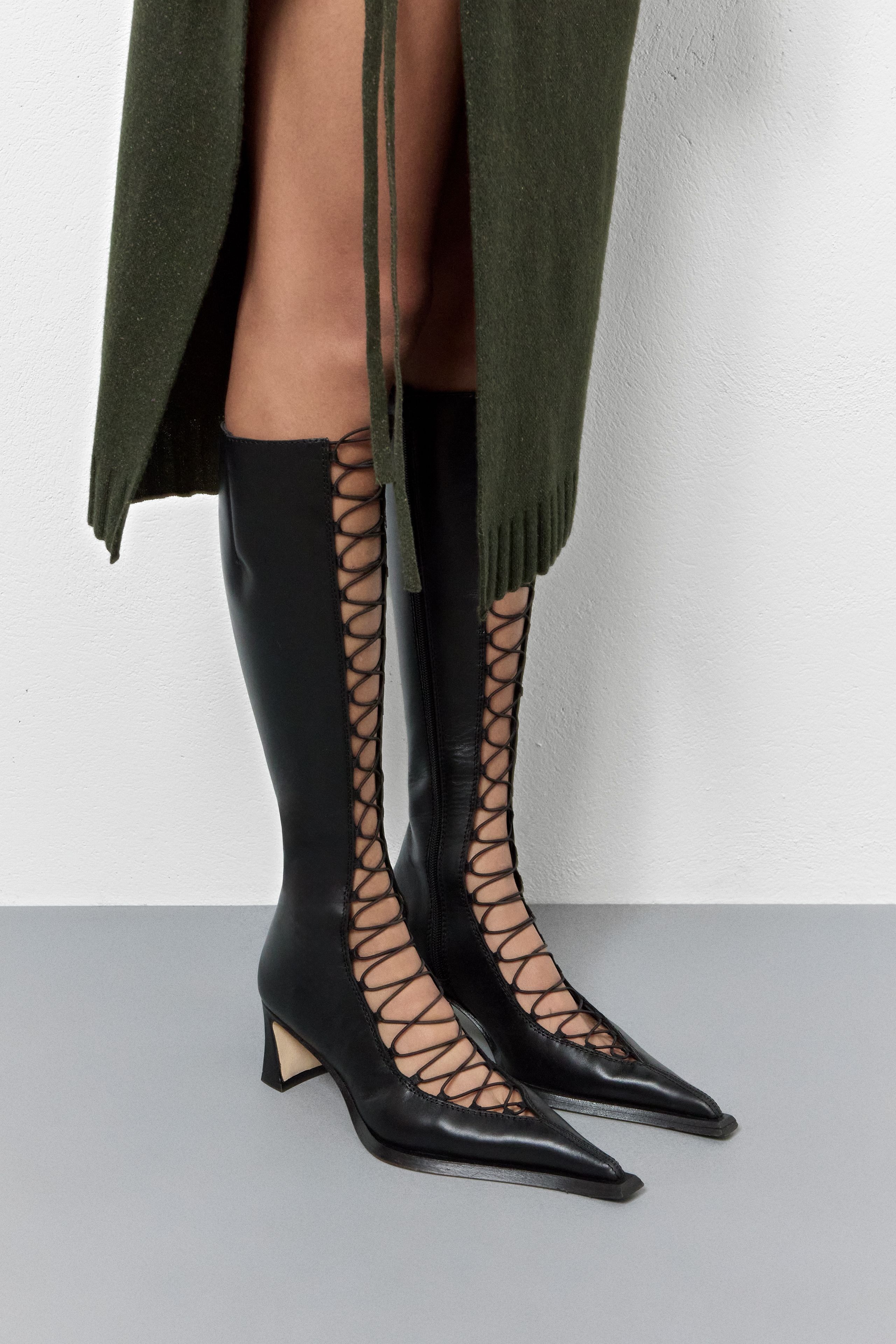
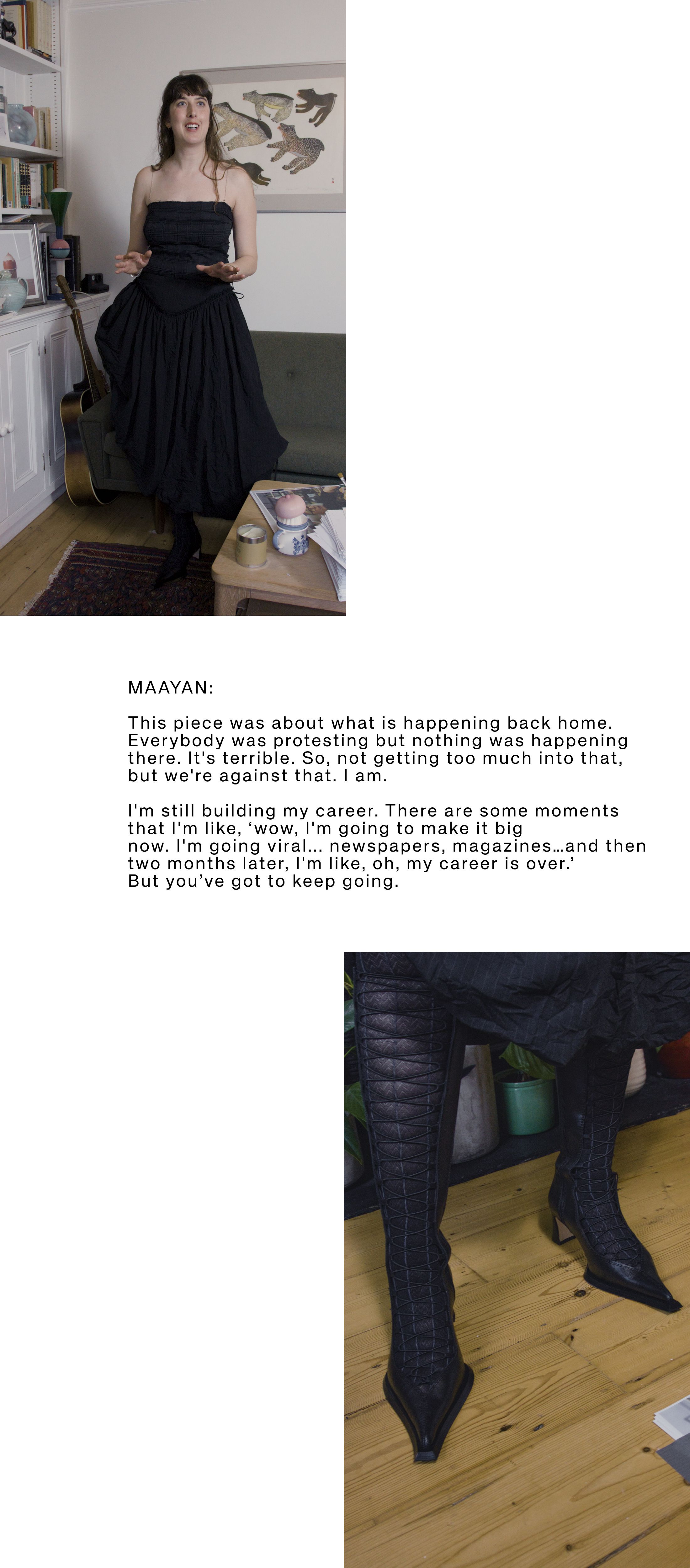
Melinda BootsBlack Leather
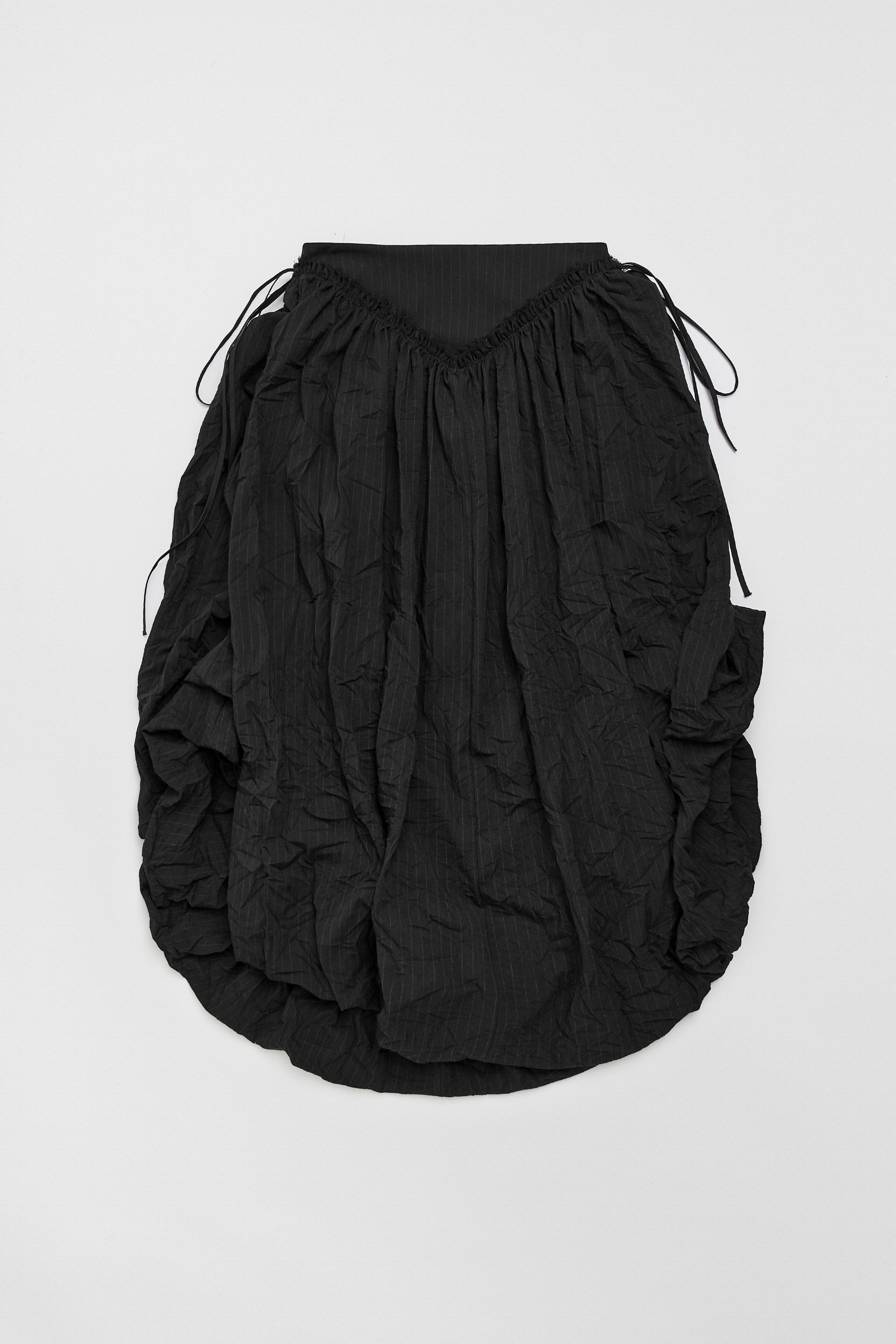
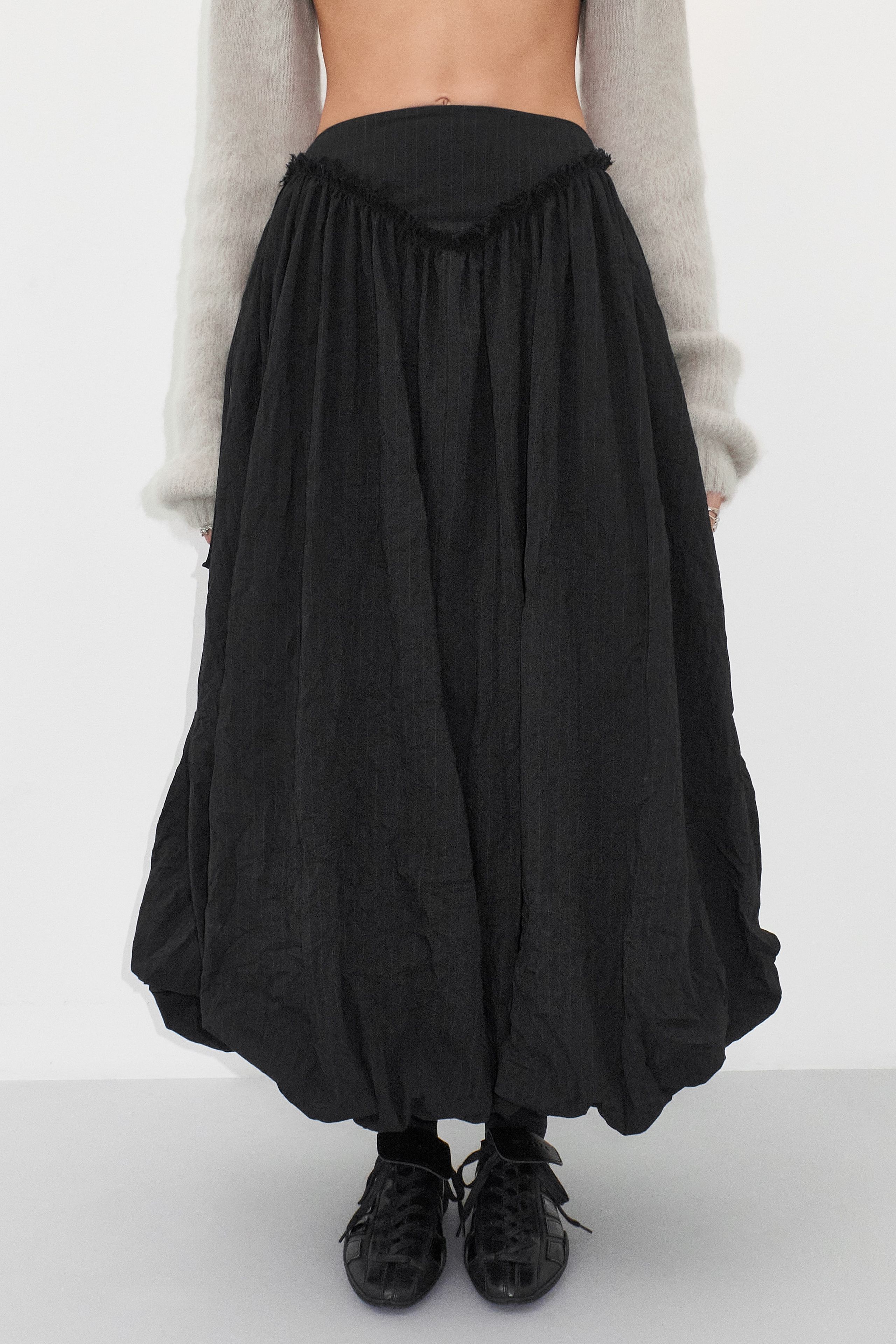
Bronte SkirtBlack Crinkled Pinstripe
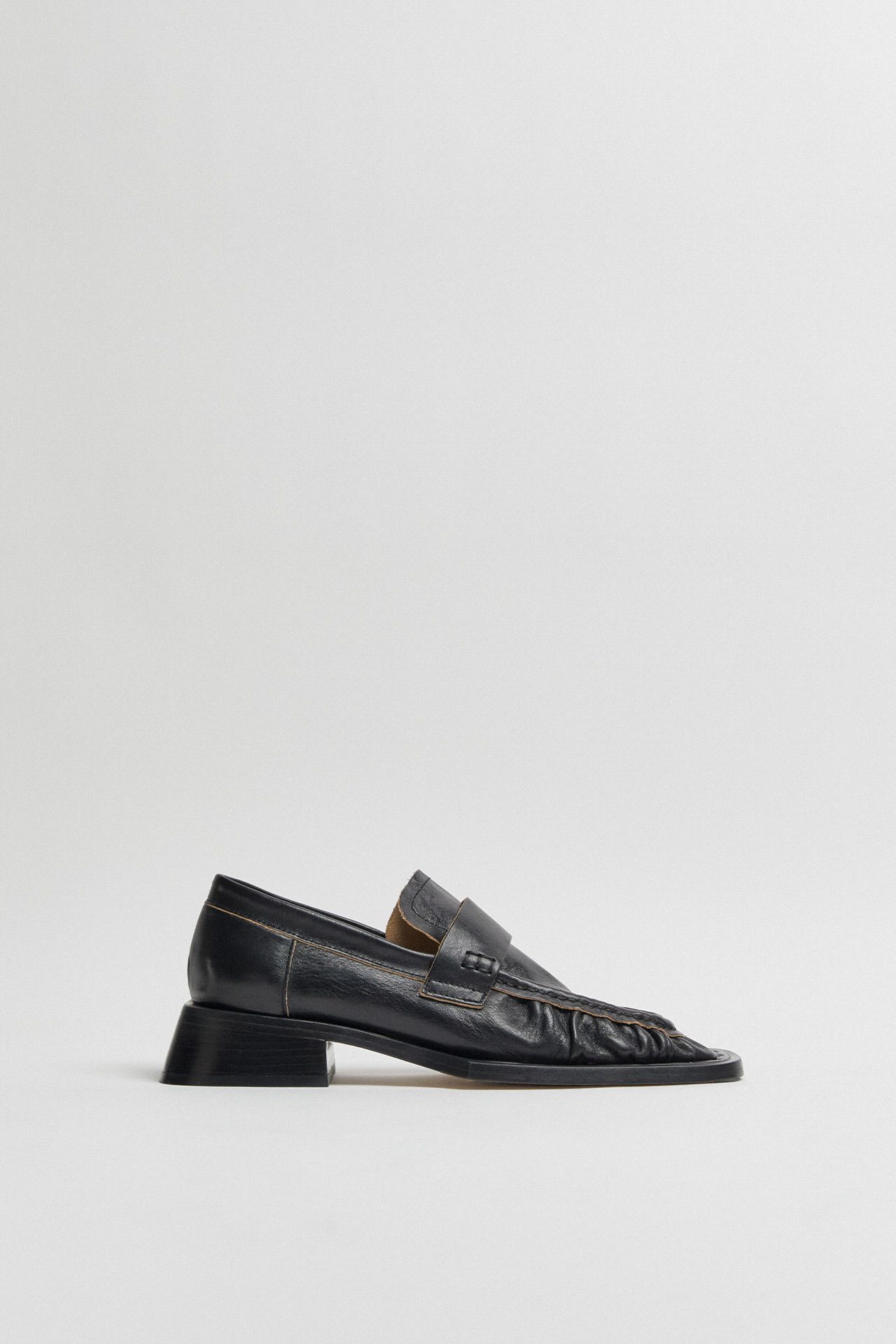
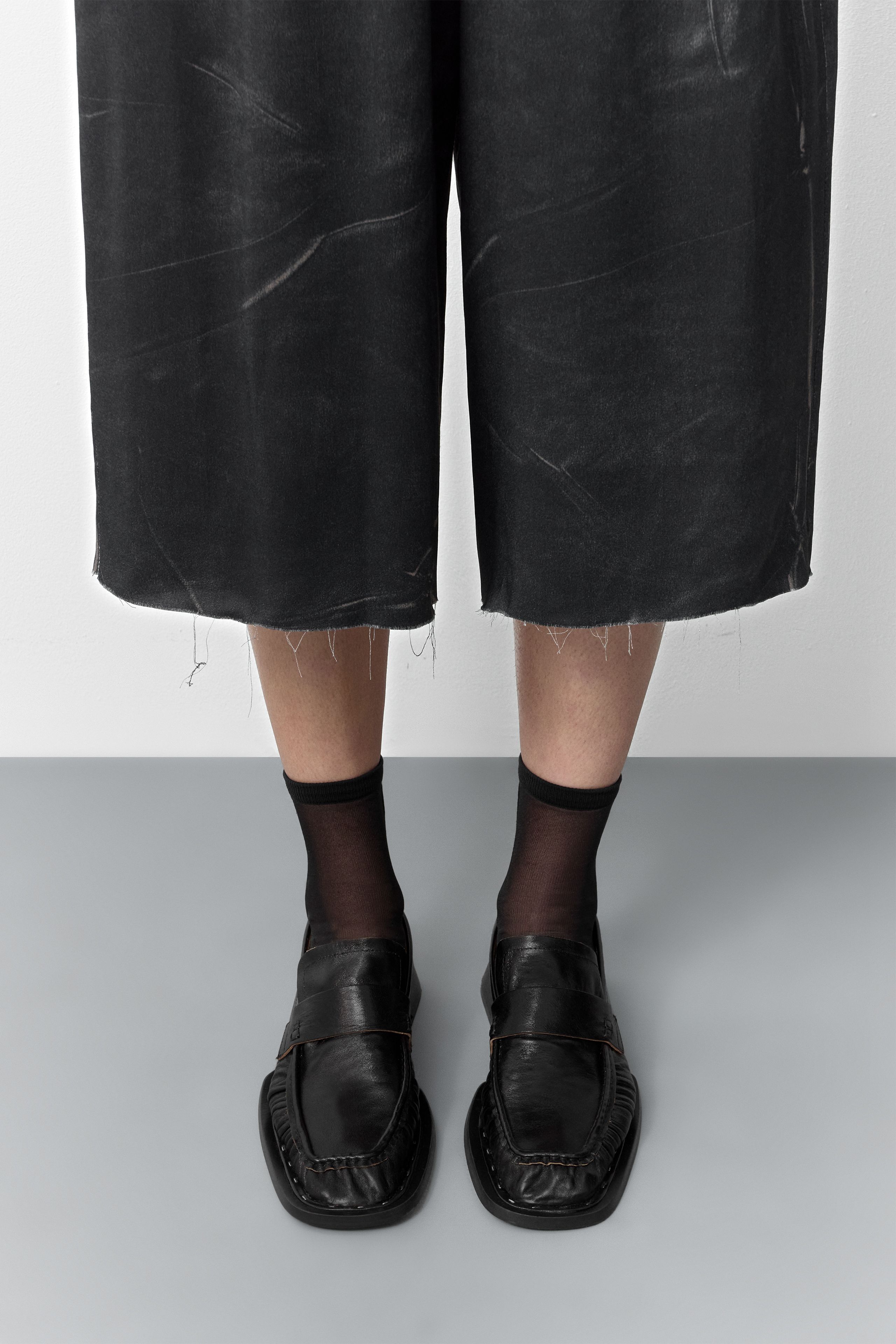
Airi LoafersBlack Leather
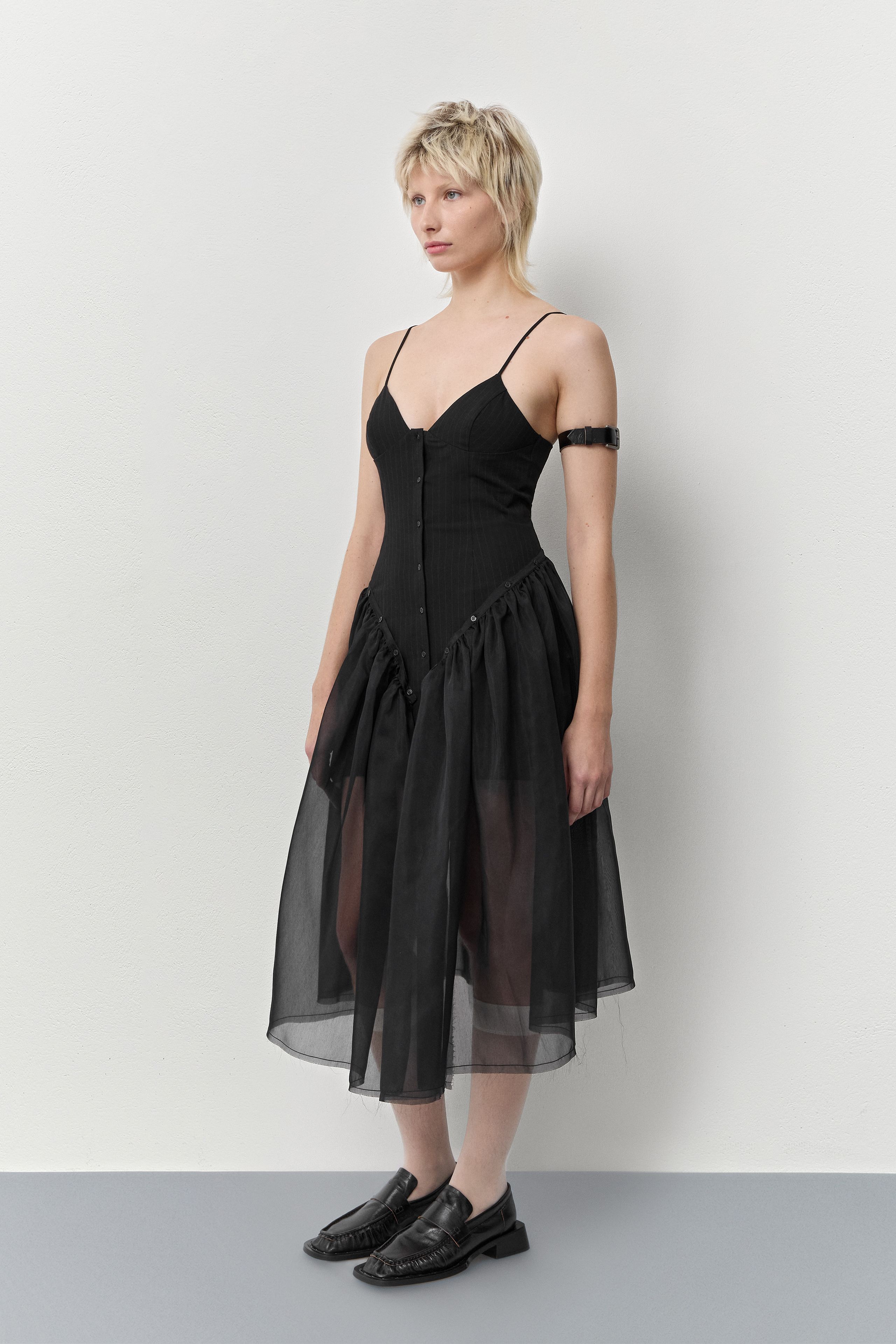
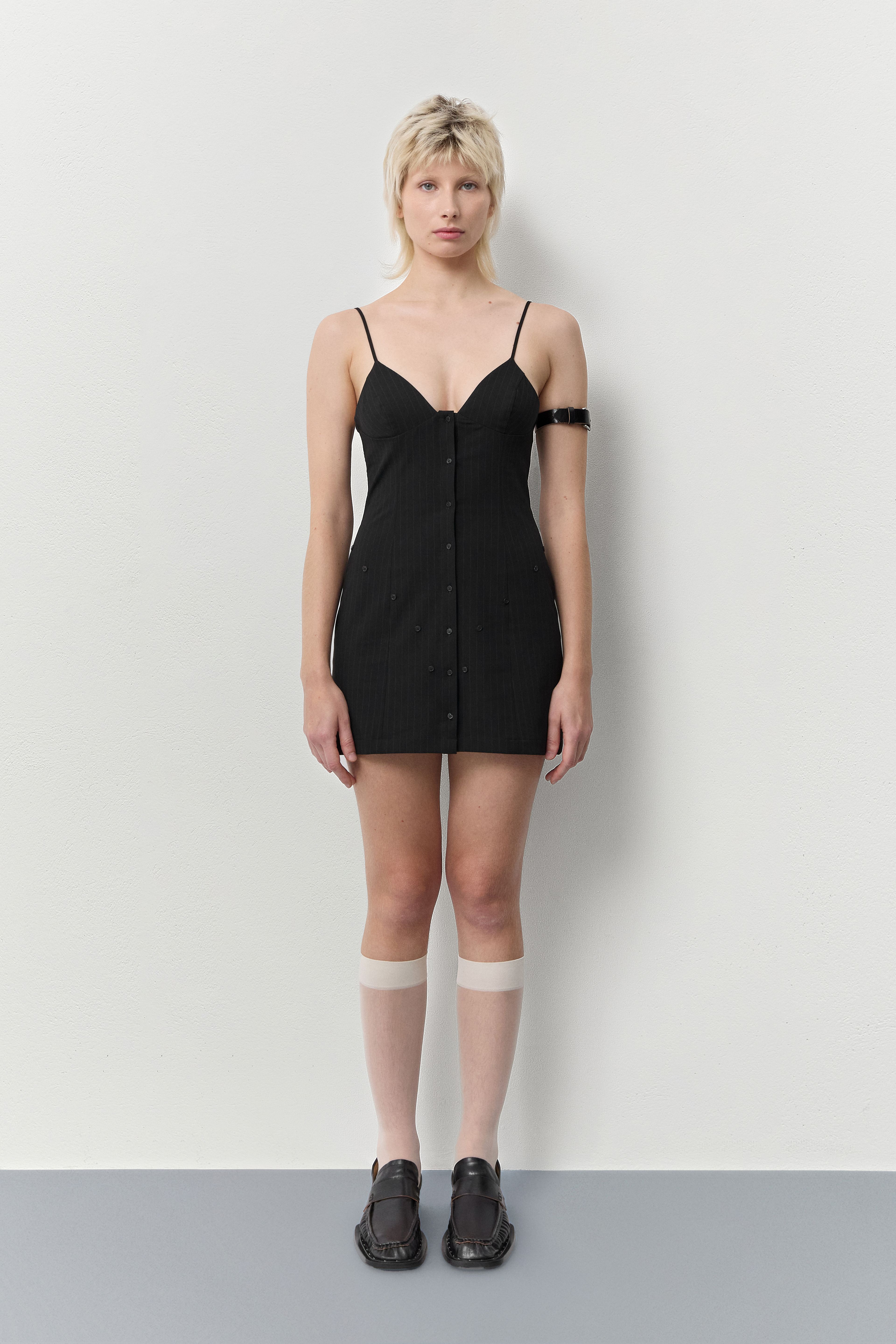
Pauline DressBlack Pinstripe Sheer
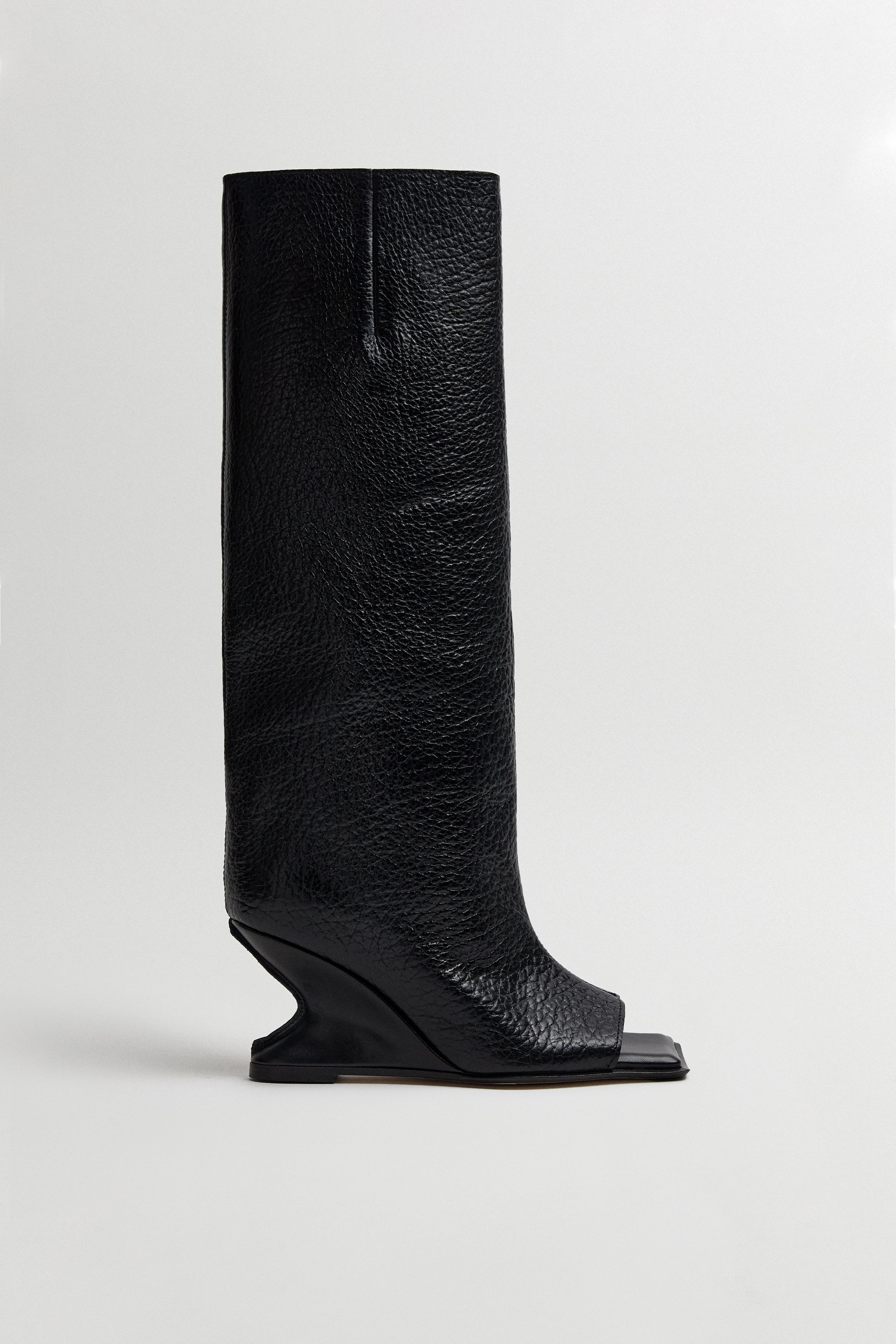
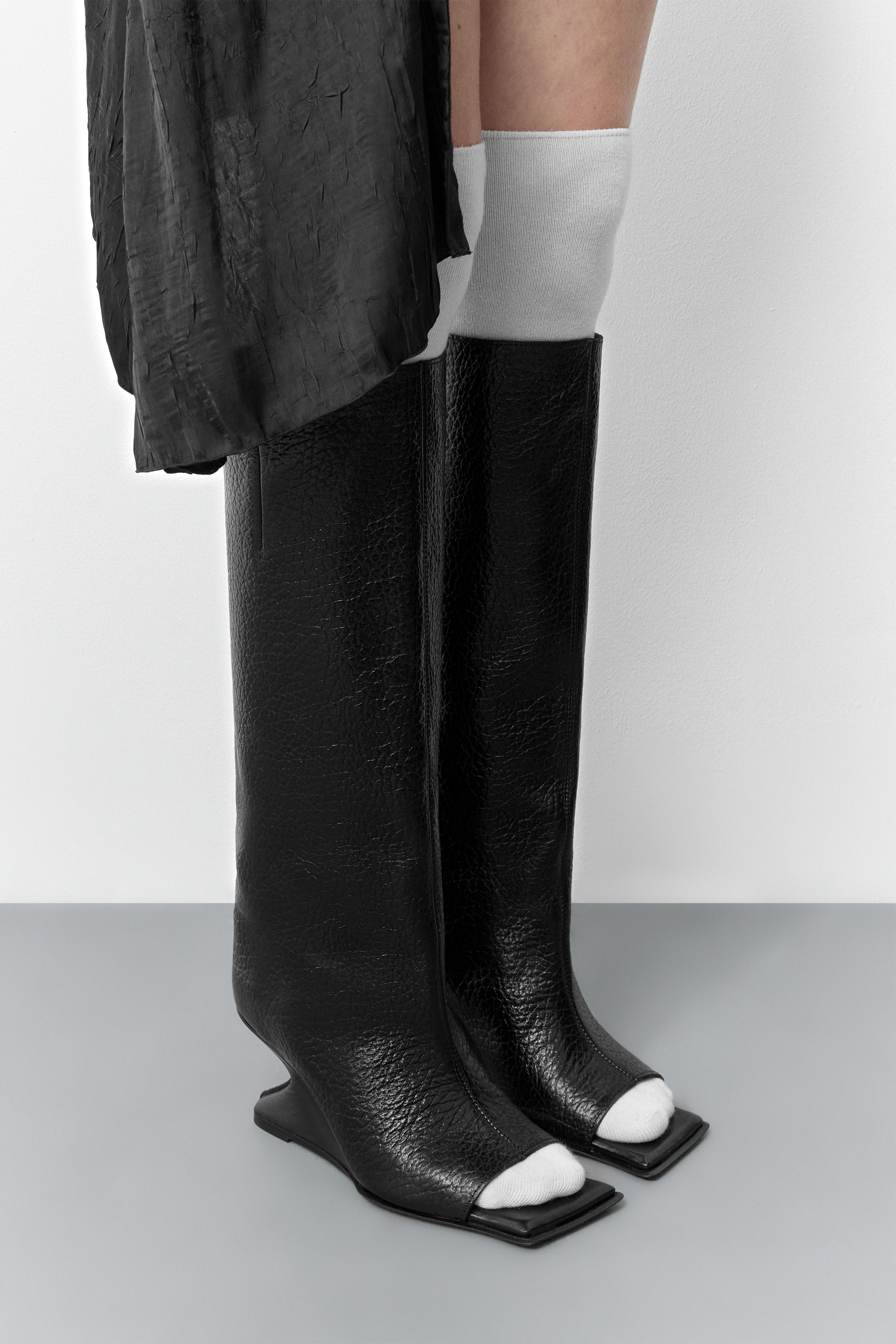
Salima BootsBlack Grainy Leather